RFID inventory management is a method of tracking stock in which every item carries a small radio chip (an RFID tag), and fixed or handheld readers count those items automatically — without line of sight, one at a time, or human scanning. Where barcode inventory asks "walk to the item, find the code, scan it", RFID inventory asks the opposite question: "what is here?", and the answer arrives in seconds.
The definition, stated precisely
RFID inventory management is the combination of four things: item-level RFID tags (usually passive UHF, EPC Gen2), readers that interrogate them, middleware that filters and de-duplicates the reads, and an ERP or WMS — Odoo, SAP, or similar — where the resulting counts land. The counting is the visible part; the middleware and the ERP data model are where most projects actually succeed or fail.
How the data flows, from tag to ERP
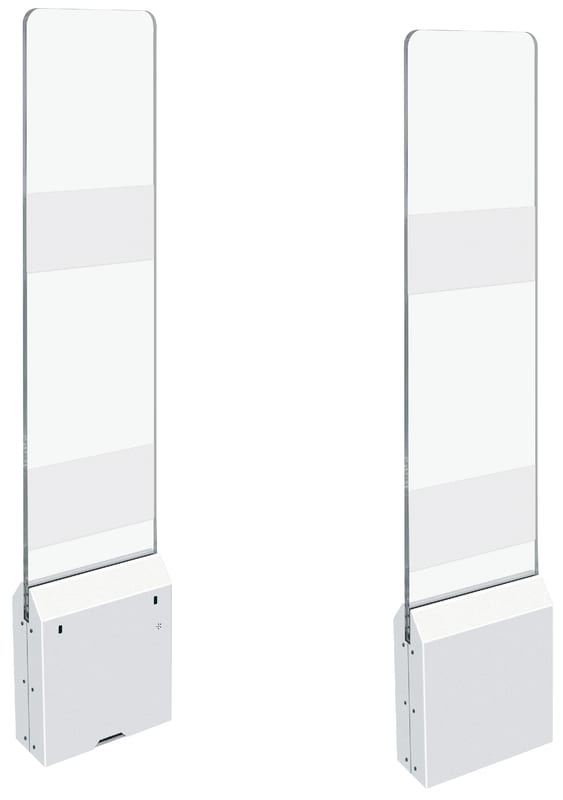
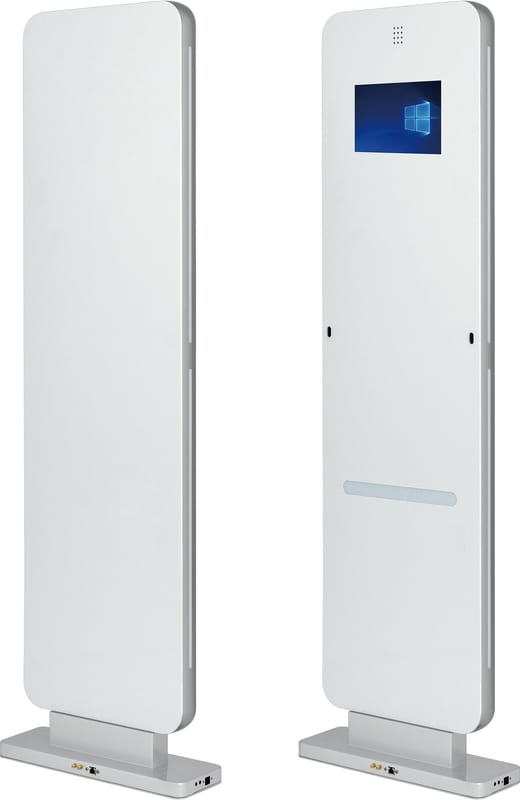
A passive tag has no battery. The reader emits a radio signal, the tag harvests energy from it and answers with its stored EPC code — a unique serial number for that physical item. A gate reader at a warehouse door captures every pallet passing through; a handheld reader sweeps a shelf; a robot or drone does the same autonomously overnight. Middleware removes duplicate reads, applies business rules (this read is a receiving event, that one is a sale), and writes events into the ERP, where inventory quantities update in near real time.
What changes compared with barcode
| Dimension | Barcode | RFID |
| --- | --- | --- |
| Line of sight | Required | Not required |
| Items per scan | One | Hundreds per second |
| Full store count | Days, manual | Minutes, walkable |
| Typical accuracy | 65–75% (human-dependent) | 99%+ (process-dependent) |
| Effort direction | Rises with SKU count | Nearly flat with SKU count |
The last row matters most for assortments with many sizes and colors: barcode counting effort grows with every added SKU, RFID counting effort barely moves. That is why apparel, footwear, jewelry and spare-parts inventories were the earliest adopters.
Where the accuracy numbers come from
The frequently quoted "99.9% accuracy" is not a property of the technology; it is a property of the process. Reads are physically near-perfect. Errors enter through untagged items, tags buried inside metal or liquid, and exceptions that nobody works through — the tag that was applied crooked, the carton that was double-counted. Mature deployments therefore pair RFID with an exception queue: every mismatch between a physical read and the ERP record becomes a task that someone resolves the same day. Accuracy stays high because discrepancies have nowhere to hide.
What RFID inventory management is not
It is not a GPS tracker — passive tags only answer when a reader is nearby. It is not automatic by itself — someone still has to decide where readers go and what each read means. And it is not a replacement for cycle-count discipline; it is the tool that makes cycle counting cheap enough to actually happen.
Frequently asked questions
**What does RFID stand for in inventory management?** Radio Frequency Identification: a tag that identifies itself over radio when interrogated by a reader.
**How is RFID inventory management different from barcode?** Barcode needs line of sight and one-at-a-time scanning; RFID reads hundreds of tagged items per second without seeing them, which turns a full physical count from days of labor into minutes of walking or driving a reader past the shelves.
**Do RFID tags need batteries?** Passive UHF tags — the kind used for retail and warehouse inventory — do not. They harvest energy from the reader signal. Active tags with batteries exist but are used for different jobs, such as tracking vehicles or returnable containers over long ranges.