Frequency is the first decision in an RFID project and the one most often made by habit rather than arithmetic. The band fixes read range, tag price, tolerance to metal and liquid, regulatory compliance, and — ultimately — which processes you can automate at all.
Choosing between low frequency (LF), high frequency (HF) and ultra-high frequency (UHF) is therefore not a technology argument. It is a question about what has to be read, at what distance, how many at once, and under what physical conditions.
What actually differs between LF, HF and UHF?
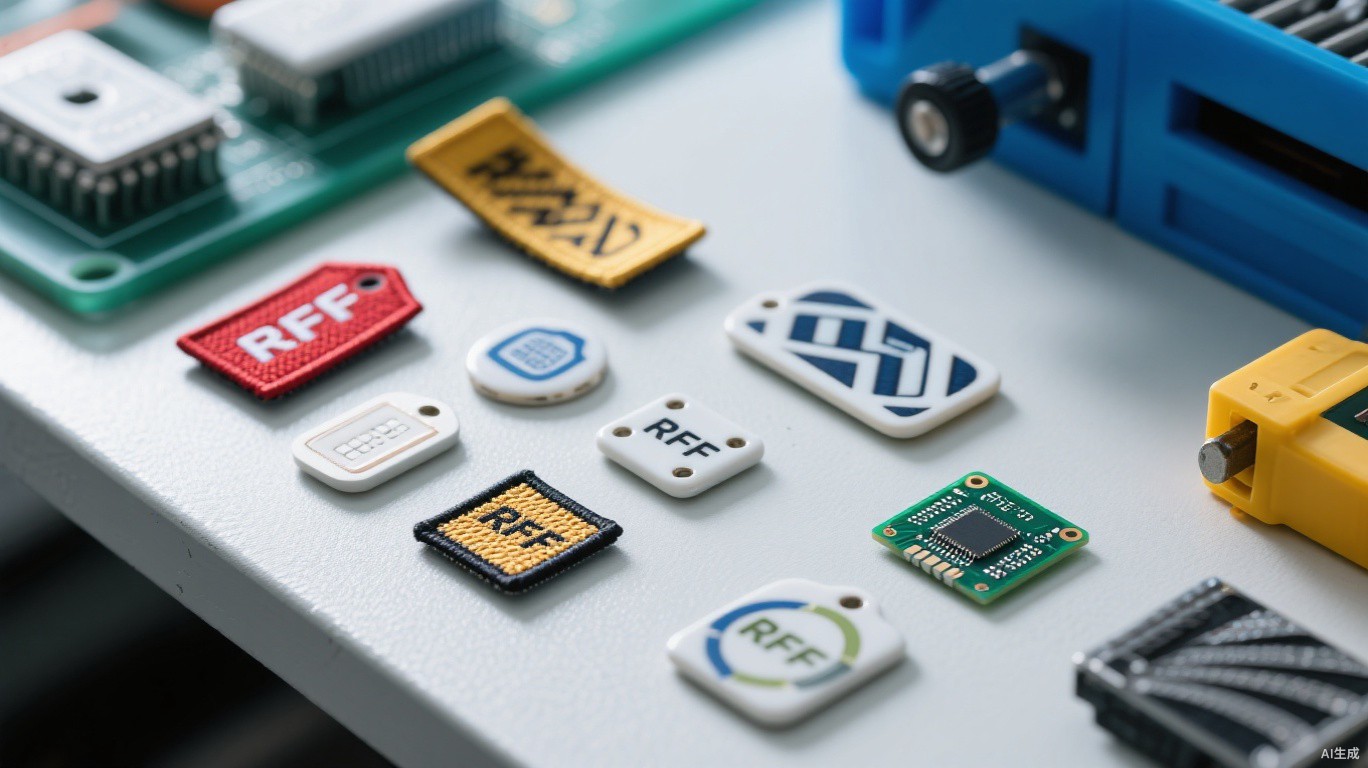
The three bands use different physics, and that explains every practical difference that follows. LF and HF work in the near field through magnetic coupling: the reader coil and the tag coil behave like a loosely coupled transformer. UHF works in the far field through backscatter: the tag reflects a modulated portion of the reader's carrier wave.
- LF, 125–134 kHz: range measured in centimetres, one tag at a time, slow data rate, but almost immune to metal and water detuning.
- HF, 13.56 MHz: roughly one metre with a well-designed antenna, moderate data rate, the basis of NFC and most library systems.
- UHF, 860–960 MHz: three to twelve metres with fixed readers, hundreds of tags per second, but sensitive to metal, water and dense packaging.
Regulation is regional and it is not optional. The European Union uses 865–868 MHz, the United States 902–928 MHz, China 920–925 MHz, Japan 916–921 MHz. A reader configured for one region will not legally run at full power in another, which matters as soon as you roll out across countries.
Which frequency wins for asset tracking at scale?
UHF, without much contest, and the reason is cost per identity rather than raw range. A passive UHF inlay costs roughly USD 0.05–0.30 at volume; an HF label costs USD 0.15–0.60; an LF glass capsule USD 1–5. Only UHF is cheap enough to put on individual garments, cartons or tools.
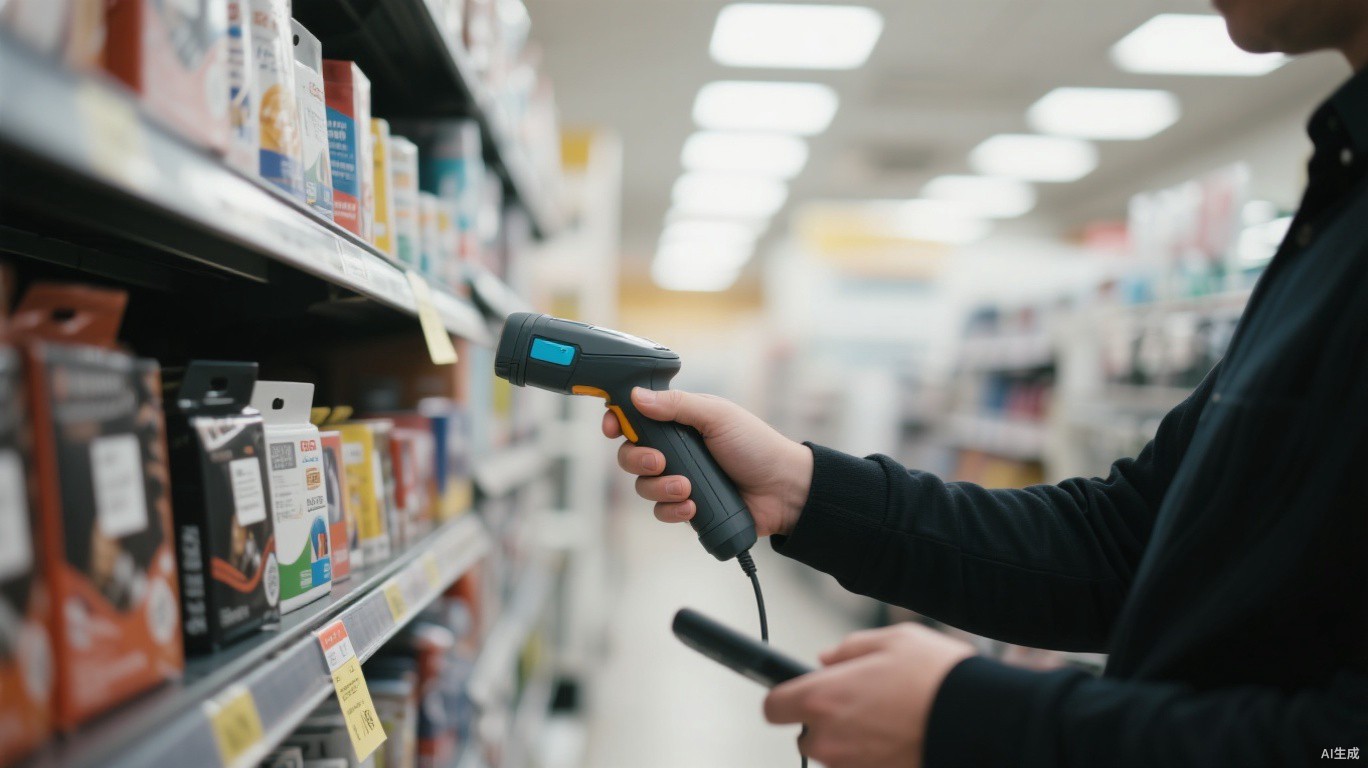
Throughput follows from physics. A modern fixed UHF reader with four antennas reads 500–1,200 tags per second at the air interface, so a portal can capture a 60-carton pallet in under two seconds and a handheld can sweep a 200-garment rail in a few seconds. No HF or LF system does that.
- Portal and dock-door reading: UHF only.
- Item-level retail and apparel: UHF at 0.05–0.30 USD per tag.
- Work-in-progress tracking on production lines: UHF, usually 865–868 MHz in Europe.
- Inventory drones and robots: UHF, because range is the entire product.
Where does HF still beat UHF?
HF wins wherever the read zone must be small, deliberate and physically bounded — or where the tag sits next to water or metal at short range.
Library systems remain HF because a 30-centimetre read zone at the counter prevents picking up books on the shelf behind. Ticketing, event wristbands, hotel keys and NFC payment all live at 13.56 MHz because the phone in the customer's pocket already contains an HF reader. Blood bags, reagent tubes and laboratory consumables are easier to tag at HF: the liquid detunes a UHF inlay badly at close range, while HF simply needs a slightly larger antenna.
- Access control and staff badges: HF or LF, never UHF.
- Medical consumables and sample tubes: HF for reliability.
- Library and media: HF, because the zone must be controlled.
- Luxury authentication requiring phone interaction: HF/NFC.
What do metal, liquid and dense media do to each band?
Metal reflects UHF energy and detunes the antenna; water absorbs it. That single fact drives most of the engineering effort in industrial UHF: anti-metal tags with ferrite backing, foam standoffs of 5–10 mm, or a plastic bracket that lets the metal become part of the antenna structure instead of a short circuit.
LF is the most metal-tolerant band because the magnetic field passes through metal at short range, which is why tooling, machine spindles and animal tags still use it. HF sits in between: a metal surface behind an HF label shifts its resonant frequency, but a 1–2 mm spacer usually restores it.
- On-metal tool and asset tracking at short range: LF, or UHF with anti-metal tags.
- Liquid-filled containers at item level: HF, or UHF with a standoff.
- Dense pallets of cartons: UHF, but expect 5–15 % read loss without a proper portal design.
- Metal shelving in retail backrooms: UHF with shelf-edge antennas, never a single ceiling reader.
How do read range and tag cost trade off?
Range is not free, and a cheap tag is not always the cheaper option. The correct comparison is cost per successfully captured event, not cost per label.
An LF tag at USD 3 that is read 100 % of the time inside a 5-centimetre zone may beat a USD 0.10 UHF inlay that is missed 8 % of the time when the pallet is wrapped in stretch film. Add reader cost, antenna count, cabling, installation labour and the labour to apply the tag, and the ranking changes again. In practice UHF still wins at volume because the tag cost dominates at item level, while HF wins where the process value per read is high and the zone must stay tight.
- Cost per tag: UHF lowest at volume, LF highest.
- Cost per reader: UHF fixed readers USD 800–3,000 per unit plus antennas; HF USB readers USD 200–600.
- Cost of application labour usually exceeds the tag itself — budget it separately.
Which frequency should you standardise on in Odoo?
Standardise per process, not per company. Most Odoo deployments end up with two bands and that is healthy: UHF for inventory, work in progress, logistics and asset registers; HF or NFC for access control, patient wristbands, consumables and any read zone that must stay within a metre.
Keep them apart in the ERP as well. Each band should have its own operation types, its own identifier scheme in the tag (EPC SGTIN for UHF items, a shorter unique ID for HF badges) and its own middleware path into Odoo. Mixing both into a single RFID stock location is the fastest way to create duplicate quantities that nobody can reconcile.
- UHF: stock.quant, stock.move, inventory adjustments, WIP operations.
- HF/NFC: hr.employee, maintenance requests, access events, consumption records.
- Never write both bands into the same quant without an explicit deduplication rule.
Bottom line
Pick the band from the physical job, then cost it. UHF is the default for anything at item or pallet level because tag economics make it the only band that scales; HF survives where the read zone must be deliberate and short; LF survives where metal and distance rule out the other two. Decide the band per process, document the choice, and keep the two paths separate inside Odoo.