Most failed RFID pilots are not radio failures. They are tag failures: an inlay specified for cardboard applied to a metal shelf, a wet inlay glued to a garment that goes through an industrial wash, a 96-bit EPC used to carry a lot number that operations then cannot read back.
Tag selection is a sequence of five decisions. Doing them in order removes most of the risk, and each step narrows the options for the next one.
Step 1: fix the frequency band first
The band determines range, read speed, tag cost and what the tag can physically do. It is not a preference.
- UHF (860–960 MHz, EPC Gen2 / ISO 18000-6C): metres of range, hundreds of tags per second, passive tags from a few US cents. The default for retail, logistics, warehousing, manufacturing, asset tracking and vehicle access.
- HF (13.56 MHz, ISO 15693 / ISO 14443): centimetres of range, one tag at a time, secure and well suited to metal-adjacent and liquid-adjacent items. Jewellery, pharmacy, library, access badges, NFC payments.
- LF (125–134 kHz): very short range, slow, highly tolerant of water and metal, small ecosystem. Animal identification, industrial access control, some tool-tracking niches.
If the requirement is "read a pallet of 60 cartons in one pass", only UHF is realistic. If the requirement is "confirm the exact ring in a tray at 5 cm", UHF will over-read and HF is correct. The full comparison is in our companion article on HF, UHF and LF frequency selection.
Step 2: test the environment, not the brochure
Three environments break otherwise correct tags:
- Metal. A standard dipole inlay placed flat on a steel shelf detunes and loses most of its range. Anti-metal tags use a ferrite or foam spacer so the antenna keeps its electrical distance from the surface. The rule is to measure on the real shelf, at the real power, with the real reader.
- Liquid. Water absorbs UHF energy. Bottles, cosmetics and beverage cases reduce read range, and the effect changes with fill level. Test full and empty containers.
- Heat, cold and chemicals. Sterilisation at 134 °C, industrial laundering at 90 °C with alkali, freezer storage at −40 °C and chemical splash each eliminate whole product families. Encapsulation, not the inlay, decides survival.
A one-page test matrix — surface, distance, orientation, fill state, duration — is worth more than any datasheet comparison.
Step 3: choose the attachment and form factor
The tag must survive how the item is handled, not just how it is read:
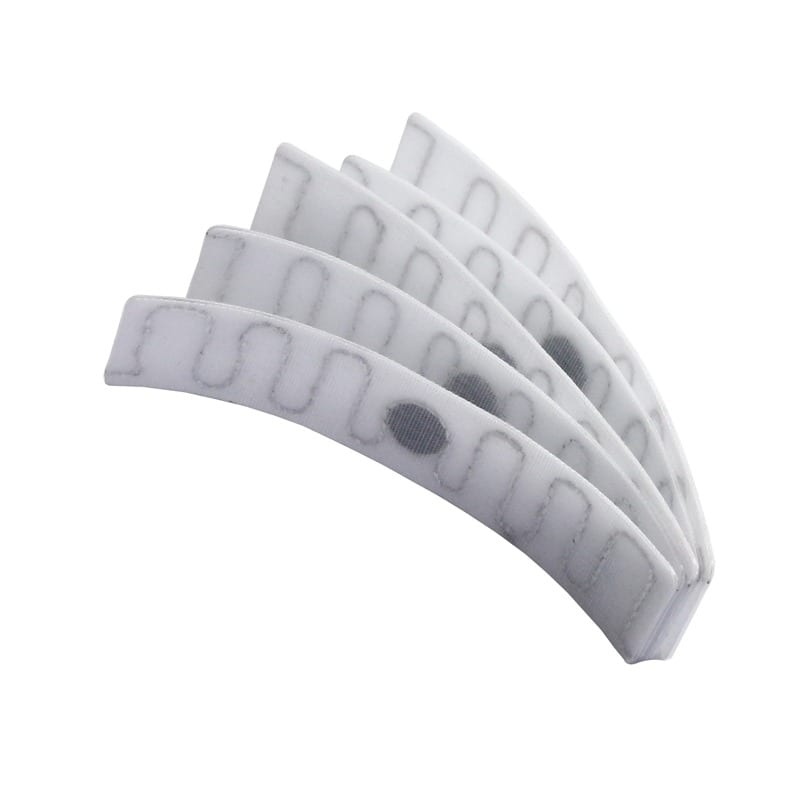
- Apparel: woven or printed fabric labels, sewn into the care-label position, tested to the wash cycle the garment actually receives.
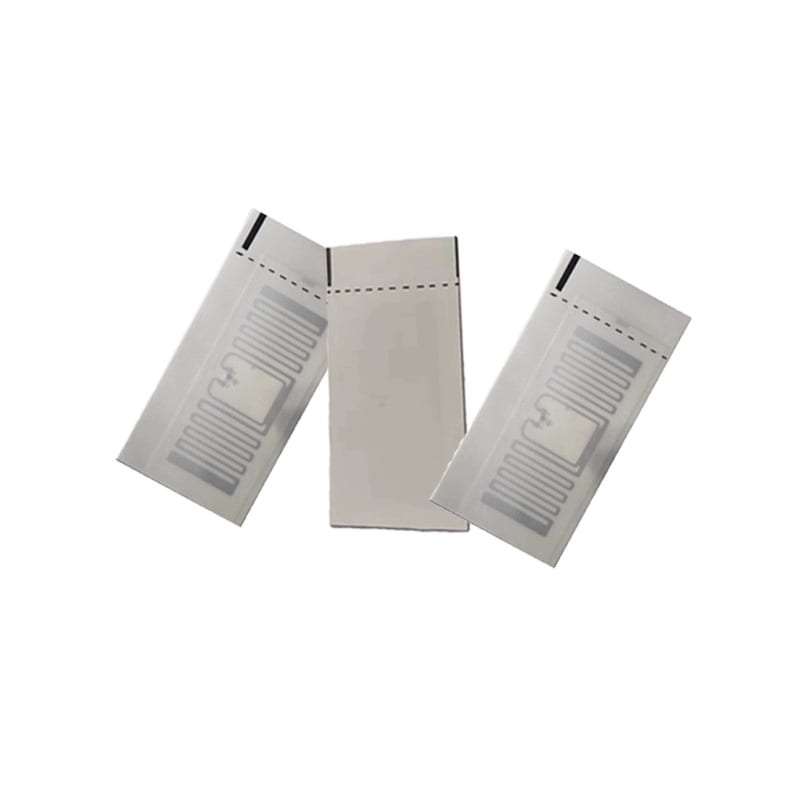
- Cartons and pallets: wet inlay or label on the case, plus a pallet licence plate that references the case list.
- Metal assets, tools, IT equipment: hard anti-metal tags, or PCB-embedded tags for boards and servers.
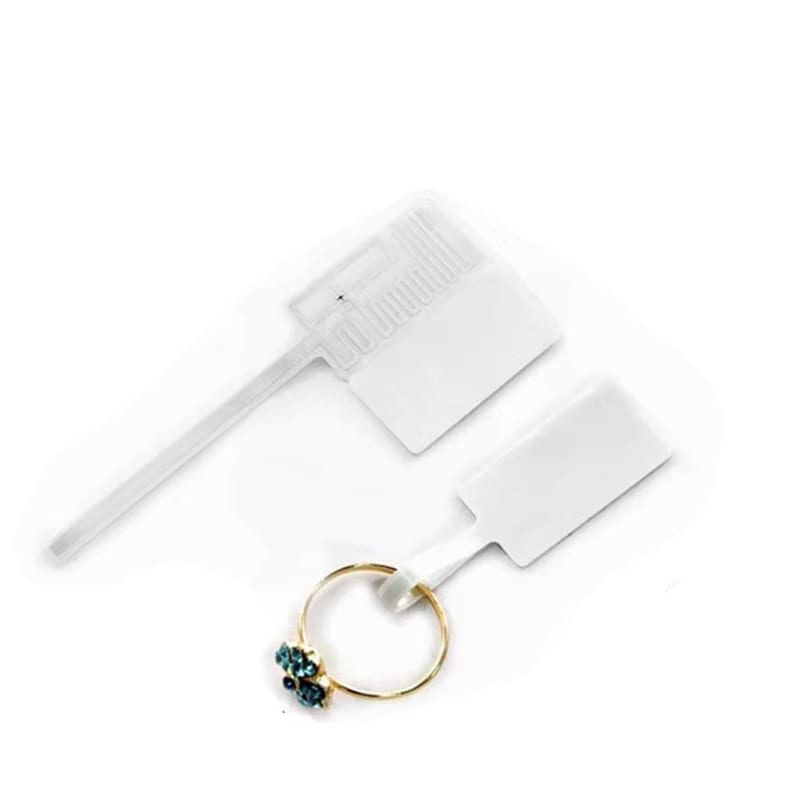
- Jewellery: small ceramic or mini inlays in the tray or on the price tag; HF where the counter read needs to be precise.
- Returnable containers and bins: rigid encapsulated tags, mounted where they cannot be hit by forklift forks.
- Single-use medical and food items: tag the packaging or the case, not the product.
Attachment is also a workflow decision. A tag applied in the wrong position — behind a metal label, under a strap, on the curved edge of a drum — reads intermittently, which is worse than not reading at all because it corrupts inventory confidence.
Step 4: pick the chip for memory and features
Once band and form factor are fixed, the chip choice is mostly about memory and security:
- 96-bit EPC is enough for SGTIN-96 and almost all retail and logistics use.
- 128-bit EPC and larger user memory suit asset registers that need offline data, but user memory has no standard layout across vendors — treat EPC as the source of truth and user memory as a cache.
- TID, access and kill passwords are needed when you must prove tag authenticity or lock a tag after use.
- Read sensitivity matters more than write speed for inventory; write performance matters at the encoding station.
Do not design around exotic features unless a documented requirement needs them. Availability and second-source options matter more over a five-year deployment.
Step 5: cost last, and cost per surviving read
Tag price alone is misleading. The number that matters is cost per successful read over the tag's life:
- A 4-cent wet inlay that fails on metal costs more than a 40-cent anti-metal tag, because the failure is discovered after the rollout.
- Consumables, rework, re-tagging labour and exception handling usually exceed the tag BOM in year one.
- Volume tiers change the answer: at 100k tags a year, a 10-cent difference is real money; at 5k tags, engineering time dominates.
A practical rule: choose the cheapest tag that passes the environment test with margin, then buy a second qualified source.
A validation protocol that catches problems early
Before committing volume, run a three-stage pilot:
- Stage 1 — 50 items in the lab or a quiet corner: confirm read rate at the intended distance and orientation.
- Stage 2 — one real aisle or line for two weeks: measure read rate with normal traffic, normal interference and normal operator behaviour.
- Stage 3 — one full site for a month: measure inventory accuracy against the current process, not against the vendor's claim.
Define pass/fail before the pilot starts. "Read rate above 98% at the dock door, above 95% on the sales floor" is a testable requirement; "good performance" is not.
Common selection mistakes
- Buying tags before defining the read point. The read point decides the tag, not the other way round.
- Testing on a wooden table and deploying on steel.
- Using HF for bulk counting, or UHF for tray-level jewellery counts, because the price looked better.
- Ignoring the printer and encoder: a tag that cannot be encoded reliably at line speed is not a usable tag.
- Forgetting the reverse flow — returns, repairs, reusable containers — where tags are read in conditions the original design never considered.
Tag selection is cheap to get right and expensive to get wrong. The sequence above, plus a measured pilot, is usually the difference between an RFID project that survives its first year and one that quietly reverts to barcodes.