In the barcode era, cycle counting is a trade-off: every count you run takes hours away from shipping. RFID changes the equation — one operator with one handheld reads hundreds of tags per minute, and a sweep covering 1,000 tags takes roughly 30 minutes. But speed alone creates no value: with the wrong method and a wrong frequency, you simply produce wrong data faster. This article covers methods, frequency, and how to run the first count.
Three counting methods
- Zone counting: divide the warehouse into fixed areas and complete one or two per day or week. The simplest method with the most mechanical scheduling; suits warehouses with evenly distributed SKUs.
- ABC-weighted counting: classify SKUs by value and velocity — count A items often, C items rarely. Before RFID, ABC was the only way to ration labour; with RFID it becomes an attention-allocation tool that concentrates exception handling where the money is.
- Event-triggered counting: fixed readers at receiving or exit refresh zone counts incidentally as goods move. It consumes no counting hours but depends on fixed infrastructure and deduplication logic — a method RFID enables that barcode cannot.
The mature pattern stacks all three: event-triggered as the base layer, zone counting as routine, ABC deciding where exceptions get handled first.
The frequency matrix
| Class | Typical profile | Suggested frequency |
|---|---|---|
| A items | High value or velocity, top 20% of revenue | Weekly |
| B items | Moderate value and velocity | Monthly |
| C items | Low value, slow movers | Quarterly |
| High-shrink categories | Theft-prone, mis-pick-prone, high returns | Weekly regardless of class |
| WIP / staging areas | Constant movement | Event-triggered, continuously refreshed |
The matrix assumes RFID has driven the unit cost of a count near zero. "Weekly counts on A items" was infeasible under barcode because headcount did not exist; after RFID the constraint shifts from labour to exception-handling capacity — counting is easy, resolving the differences is not.
Handheld sweep vs fixed portal
- Handheld sweep: one operator with one handheld covers an assigned area at roughly 30 minutes per 1,000 tags. Flexible, needs no fixed infrastructure, reaches every corner; but it only reflects the state at the moment of the walk.
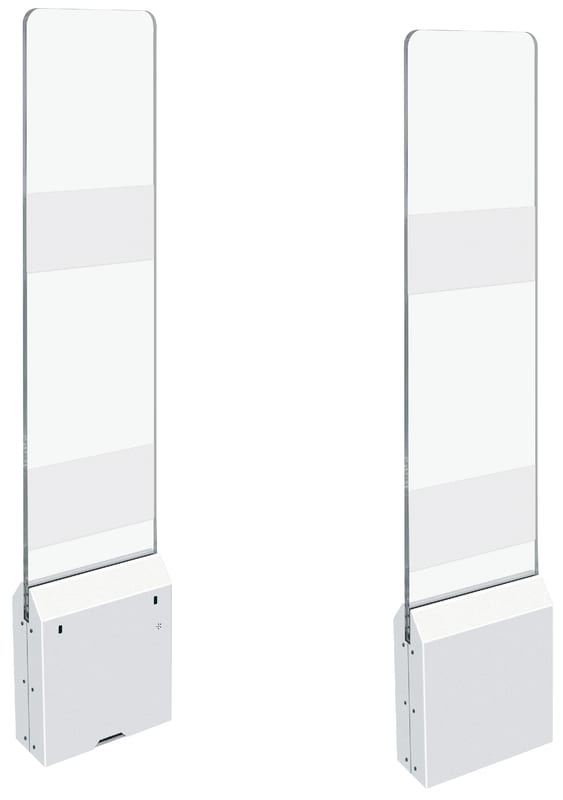
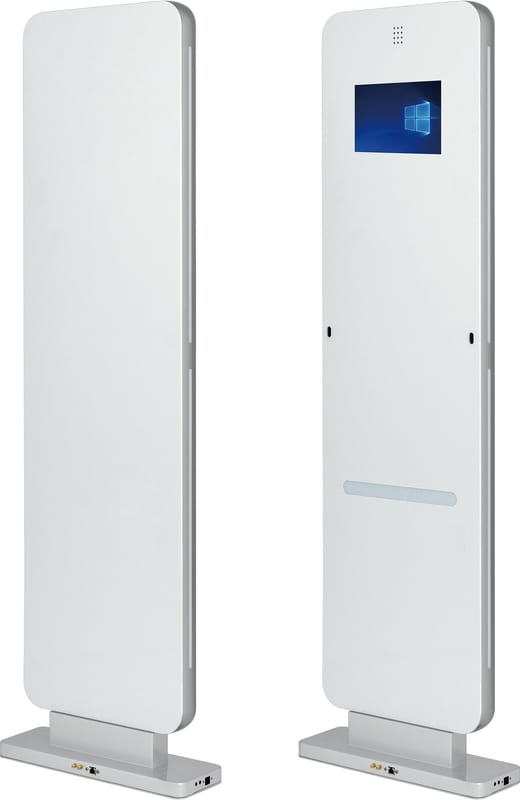
- Fixed portal continuous counting: readers at dock doors, exits or aisle entries read around the clock, rolling inventory status in real time. No labour consumed, captures every movement between manual counts; but blind spots need deliberate design and the initial investment is high.
Most warehouses end up running both: fixed points on main aisles and doors, handhelds for deep lanes and exceptions.
Measure the baseline before go-live
The point of RFID counting is accuracy moving from X to Y. Before go-live, run one manual full count and record three things: time taken, the variance rate against the system, and the distribution of the variance list. Without that baseline, a post-launch "97% accuracy" proves nothing — you cannot tell improvement from what was already true.
Common failure modes
- Metal detuning: tags on metal shelving or metal-bearing packaging lose read rate sharply. The fix is anti-metal tags or placement changes, not more power.
- Blind zones: RF shadows come from columns, liquid-dense areas and metal-heavy shelving. Find them with a coverage heat map (read rate logged per aisle), then add antennas or adjust the walk path.
- Duplicate EPCs: a tag encoded twice, or two tags applied to one item, make "extra inventory" look like theft. Clear this class out with a one-time EPC-uniqueness scan before go-live.
- Missed zones: a walk path that skips one aisle manufactures variance. Fix count paths as system tasks rather than leaving the route to operator improvisation.
The right way to run a first count: pick a medium-density zone, sweep it twice (second pass in the opposite direction), and compare. Variances appearing in both passes are real; the rest get checked against tags and coverage before anyone touches the data.
Frequently asked questions
**How fast is RFID cycle counting really?** One operator with a handheld covers roughly 1,000 tags in 30 minutes; fixed portals read continuously without labour. Barcode scanning takes 2–5 seconds per item, so the same area typically consumes a full shift.
**How often should we count?** By class: A weekly, B monthly, C quarterly; high-shrink categories weekly regardless of class; and WIP or staging areas with fixed readers count continuously via events. The practical ceiling is exception-handling capacity, not read speed.
**What if the count disagrees with the system?** Separate physical from data problems first: metal detuning and blind zones are physical, duplicate EPCs and mapping errors are data. Variances that appear in two opposite sweeps are real; the rest get checked against tag placement and coverage before touching the data.