Pharmaceutical cold chain has two questions and they are not the same question. The first is identity: which box is this, where was it made, where has it been. The second is condition: was it kept between two and eight degrees for the whole journey, and if not, for how long and how far outside.
RFID can answer both. It cannot answer them with one data stream, and it cannot answer either without an audit trail an inspector will accept.
What regulators ask for that barcodes cannot prove
Serialisation regulation — the Falsified Medicines Directive in Europe, DSCSA in the United States, and equivalent schemes elsewhere — asks for unique identification and verification at defined points. A barcode can carry the identifier; it cannot prove that the specific box was physically present at the point of verification without a manual scan of every unit.
- Unit-level identity: each saleable unit carries its own serial, not just a lot number.
- Aggregation: a case and a pallet must know which units they contain, so a recall can be executed without opening every carton.
- Verification: at dispensing or at a defined checkpoint, the identifier must be checked against a repository.
- Traceability: the custody chain from manufacturer to dispenser, with timestamps.
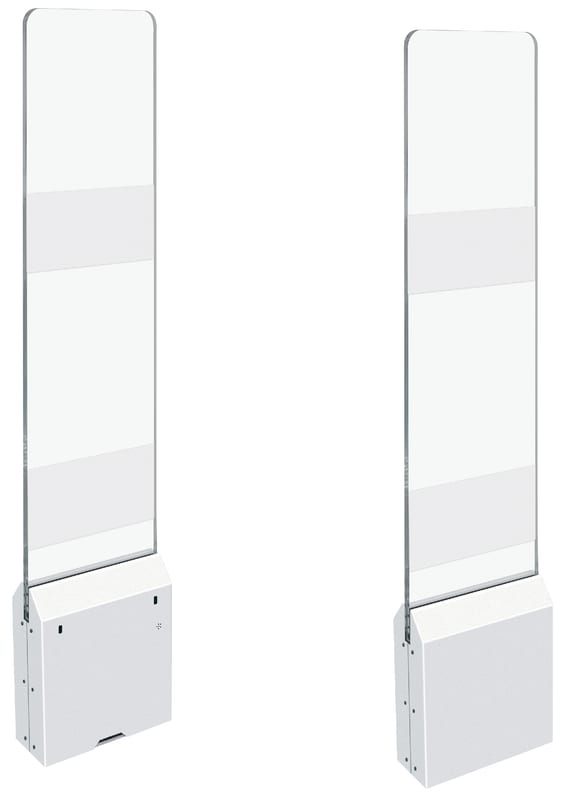
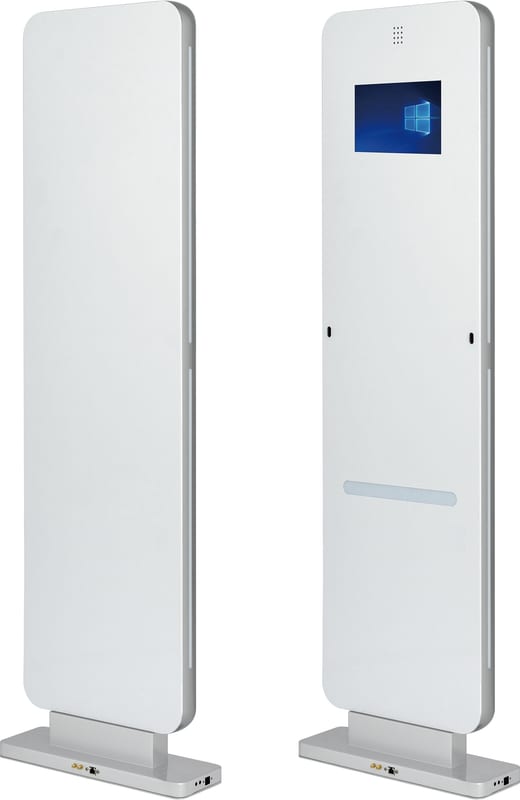
An RFID portal performs aggregation and verification in seconds per pallet. That is the regulatory argument, and it is stronger than the labour argument.
Serialisation versus temperature: two different data streams
Design these separately or the audit trail becomes ambiguous.
- Identity stream: EPC or SGTIN, commissioning event, aggregation hierarchy, custody transfers. Low volume, high integrity requirement, long retention.
- Condition stream: sensor readings with timestamps, sampling interval, calibration reference, excursion events. Higher volume, and it must survive a broken reader.
- The join: both streams must reference the same unit or case identifier, so an inspector can move from a temperature graph to the specific serial numbers affected.
Use a data logger with its own memory for the condition stream. Do not rely on the RFID read to reconstruct temperature history; if the reader was offline, the history is gone.
Tag choice for cold chain: identity tags versus sensing tags
Three options, with very different cost and reliability profiles.
- Passive identity tag (UHF): cents. Gives serialisation and aggregation. No temperature data.
- Passive sensing tag with an integrated temperature sensor and memory: one to several dollars. Records a time-temperature curve that can be read later at a portal, with no battery.
- Active or BLE logger: tens of dollars. Real-time visibility, long range, but batteries, calibration and disposal add cost and validation burden.
For most pharmaceutical logistics, the practical combination is a passive identity tag for serialisation plus a validated data logger per shipment for the temperature record, with the logger ID recorded against the aggregation hierarchy.
Reading inside a freezer: physics and the thirty-second rule
Cold chain reading is an indoor RFID problem with two extra constraints.
- Frost and ice: condensation on the antenna radome detunes it and attenuates the signal. Heated radomes or antenna placement outside the cold room with a window are standard solutions.
- Metal racks and foil packaging: many pharmaceutical shippers use foil-lined insulated containers, which block UHF entirely. In that case, read at the point of packing and unpacking, not through the container.
- The thirty-second rule: a pallet that leaves the freezer must be read within thirty seconds, before surface condensation forms. Design the door layout around that, not around convenience.
- Temperature uniformity is not the same as read reliability; a zone can be thermally perfect and electromagnetically terrible.
Excursion handling: from alarm to disposition
An excursion is not an event, it is a decision process, and the system must support the whole of it.
- Detect: threshold breach with duration and magnitude, not just a boolean alarm.
- Characterise: how long, how far outside, which serials were in the shipment at that time.
- Assess: stability data determines whether the product is still usable; this is a pharmacist or QA decision, not a software one.
- Dispose: quarantine, release, or destroy, with the reason recorded and the serials updated.
- Learn: the excursion pattern is a packaging or routing problem, and it should feed back into the next shipment design.
Data integrity and the audit trail
In a regulated environment, the record matters as much as the reading.
- ALCOA principles: attributable, legible, contemporaneous, original, accurate. Every RFID-derived record must carry who, when, what device.
- 21 CFR Part 11 and EU GMP Annex 11: access control, audit trails that cannot be edited, and electronic signatures where the workflow requires them.
- Validation: the RFID system is a computerised system and needs IQ/OQ/PQ, with the read rate demonstrated against a defined acceptance criterion.
- Retention: serialisation records typically outlive the product by years; design storage for that, not for the dashboard.
A deployment sequence for a qualified environment
- Stage one: serialisation and aggregation only, at the manufacturer's dispatch point.
- Stage two: receiving verification at the distributor, with exception handling defined before go-live.
- Stage three: temperature logger integration into the same traceability record.
- Stage four: hospital or pharmacy verification, once the upstream data is proven clean.
- Stage five: recall simulation, executed as a drill, with the time to identify affected serials measured.
Bottom line
Cold chain RFID is a compliance project with an efficiency dividend, not the reverse. Design accordingly.
- Separate identity and condition streams, and join them on the same identifier.
- Use passive tags for serialisation and validated loggers for temperature; do not ask one device to do both badly.
- Solve frost, foil and the thirty-second rule before promising portal performance.
- Make the excursion a documented decision with a named owner.
- Prove the whole chain with a recall drill, not with a slide.
A regulator will not ask how many tags you read per second. They will ask which serials were affected and how you know.