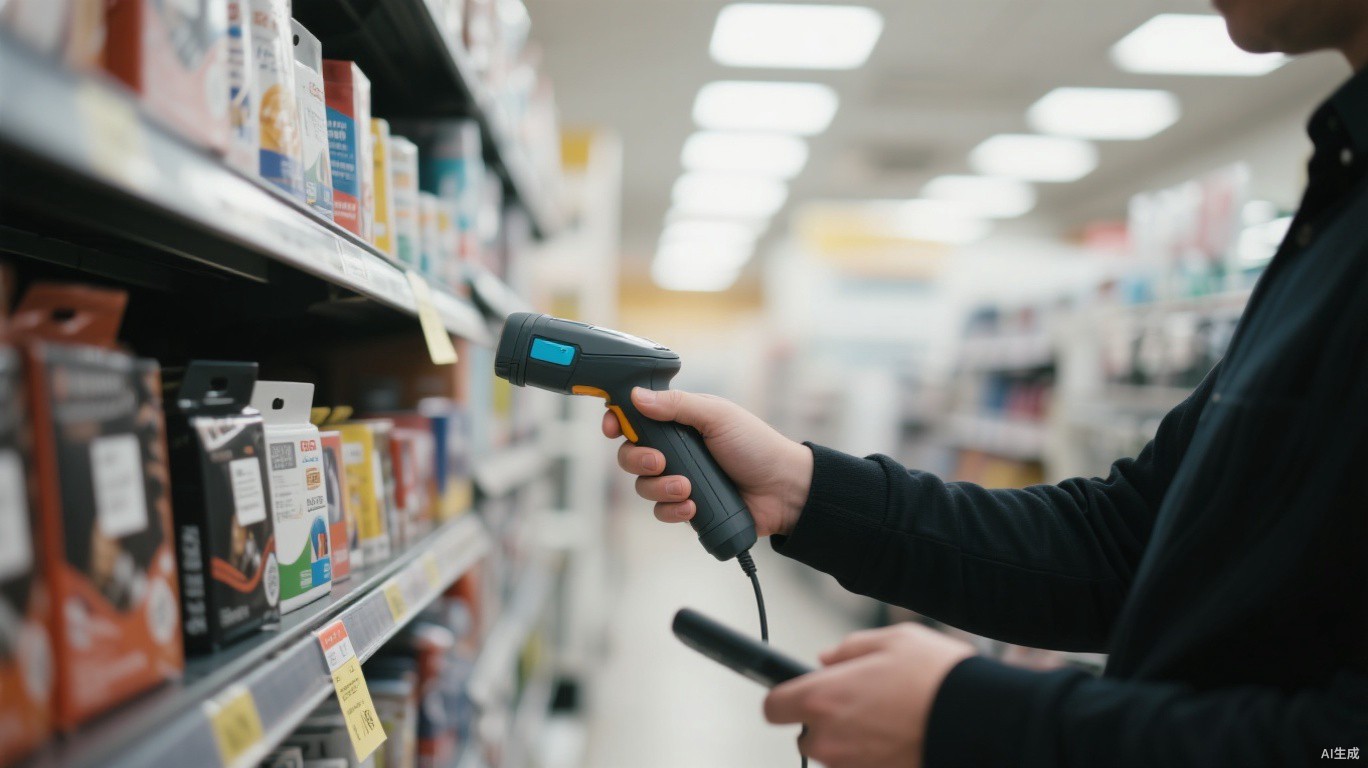
Inbound: compressed from 4 hours to 1 hour Traditional warehousing relies on manual code scanning and box-by-box verification. It is normal for a bicycle to take 4 hours, and the missed scanning rate is as high as 8%. RFID compresses the process into three steps: 1) Platform SR-U820 fixed tunnel consolidation scanning, 2) Automatic comparison of differences between the system and ASN, 3) WMS directly put on the shelf. After a cross-border 3PL customer landed, the warehousing time was reduced from 4 hours to 1 hour, and the difference detection rate increased from 2% to 100% - any short or incorrect packaging was immediately intercepted at the platform and no longer flowed into the warehouse.
Outbound: Picking errors reduced by 80% The two most common types of errors in the outbound process are "wrong picking" and "missing picking". RFID deploys fixed tunnels or handheld devices for secondary verification during the review process. Each box automatically checks the EPC list and order details before leaving the warehouse. Any discrepancies will immediately sound and light alarms. An e-commerce warehouse case shows that the review process was reduced from manual 90 seconds per box to RFID 8 seconds per box, the picking error rate was reduced from 1.2% to 0.24%, and the downstream return rate was simultaneously reduced by 35%.
Inventory: Quarterly to daily, 99.6% accurateTraditional cycle counting is conducted once a quarter, 4 people × 8 hours each time, with an accuracy of 87%. The RFID handheld machine can read 1,000+ tags in 30 seconds, and a single person can complete the inventory of 10,000 SKUs in 30 minutes, with an accuracy rate of 99.4-99.9%. More importantly, the frequency of inventory counts has been increased from quarterly to daily, so that "account discrepancies" have changed from a monthly problem to a daily problem, and the window for locating and processing differences has been compressed from 30 days to 24 hours. For high-value or high-turnover warehouse areas, it is recommended to deploy ceiling-mounted readers and writers to achieve "sensorless inventory" - the readers will automatically scan the entire warehouse area at night or during idle periods, without manual intervention. After the vaccine warehouse area of a pharmaceutical distribution company adopted this solution, it no longer needed to stop production for inventory, and a "warehouse age report" was generated daily to automatically mark products with near-expiration dates, and the accuracy of validity period management increased from 92% to 99.9%.
Transferring, sorting and 8 other scenariosIn addition to warehousing, outgoing, and inventory counting, RFID also has 9 high-frequency scenarios in the warehouse: allocation (automatic verification of inter-warehouse transfers, reducing wrong warehouse locations by 95%), sorting (RFID identification in front of cross-belt/balance wheel sorters, sorting accuracy 99.98%), returns (one-click scanning of full box returns, reducing processing time) 70%), replenishment (ceiling readers monitor low inventory locations and automatically trigger replenishment work orders), anti-theft (AI access control dual technology verification at the exit door), warehouse age (automatically generate warehouse age reports every day), traceability (EPC associated batch/validity period, recall positioning in seconds), energy efficiency (combined with AGV path optimization, walking distance reduced by 25%), and compliance (GSP/GMP automatic traces, audit preparation time reduced by 80%).