Warehouse RFID projects fail for operational reasons far more often than radio reasons. The readers work, the tags read, and the inventory is still wrong — because nobody defined what a "read" means for the business, or because the aggregation between carton and pallet was done by hand.
This case describes a representative mid-size third-party logistics site, anonymised and with figures rounded. It is structured so you can copy the design decisions, not the numbers.
Starting point
The profile: a 3PL running a regional distribution centre of roughly 20,000 m², handling 80,000–120,000 cartons a month across 4,000 SKUs, with a barcode plus WMS process.
Measured before the change:
- Trailer unloading and receiving: 3–4 hours per vehicle, including manual counting and discrepancy resolution.
- Inventory record accuracy: 87–92% by SKU-location, with monthly blind counts still finding unexplained differences.
- Dock-to-stock time: 6–9 hours, so same-day dispatch orders often released late.
- Picking errors: 1.2–1.8% of order lines, mostly wrong quantity rather than wrong item.
The business problem was not "we need RFID". It was "we cannot answer, within a shift, what is in the building and where it is".
Read point design
Only five read points were automated in phase one. That is deliberate: every additional read point adds failure modes and change management.
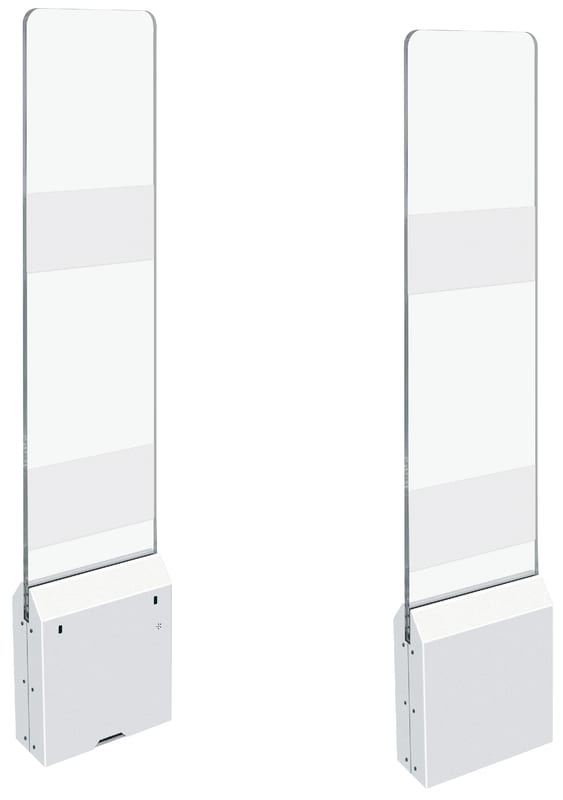
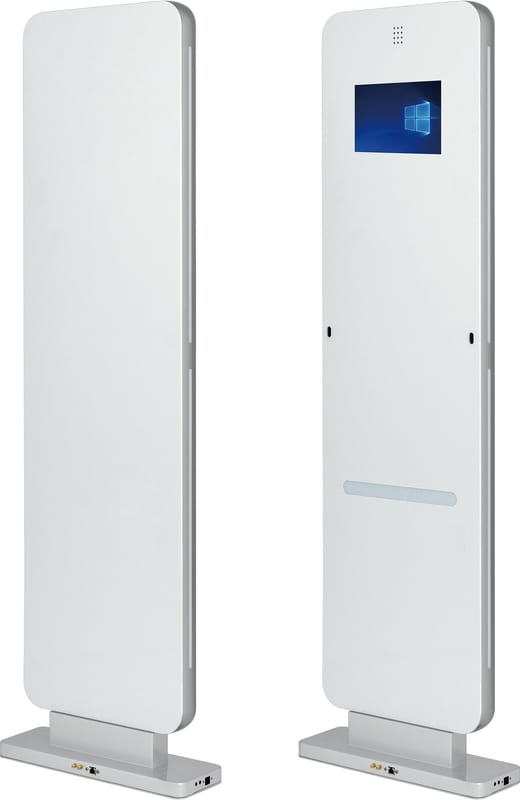
- Inbound dock doors: two portals, one per door, reading pallet and carton tags as the trailer is unloaded. The portal proves what entered, not where it went.
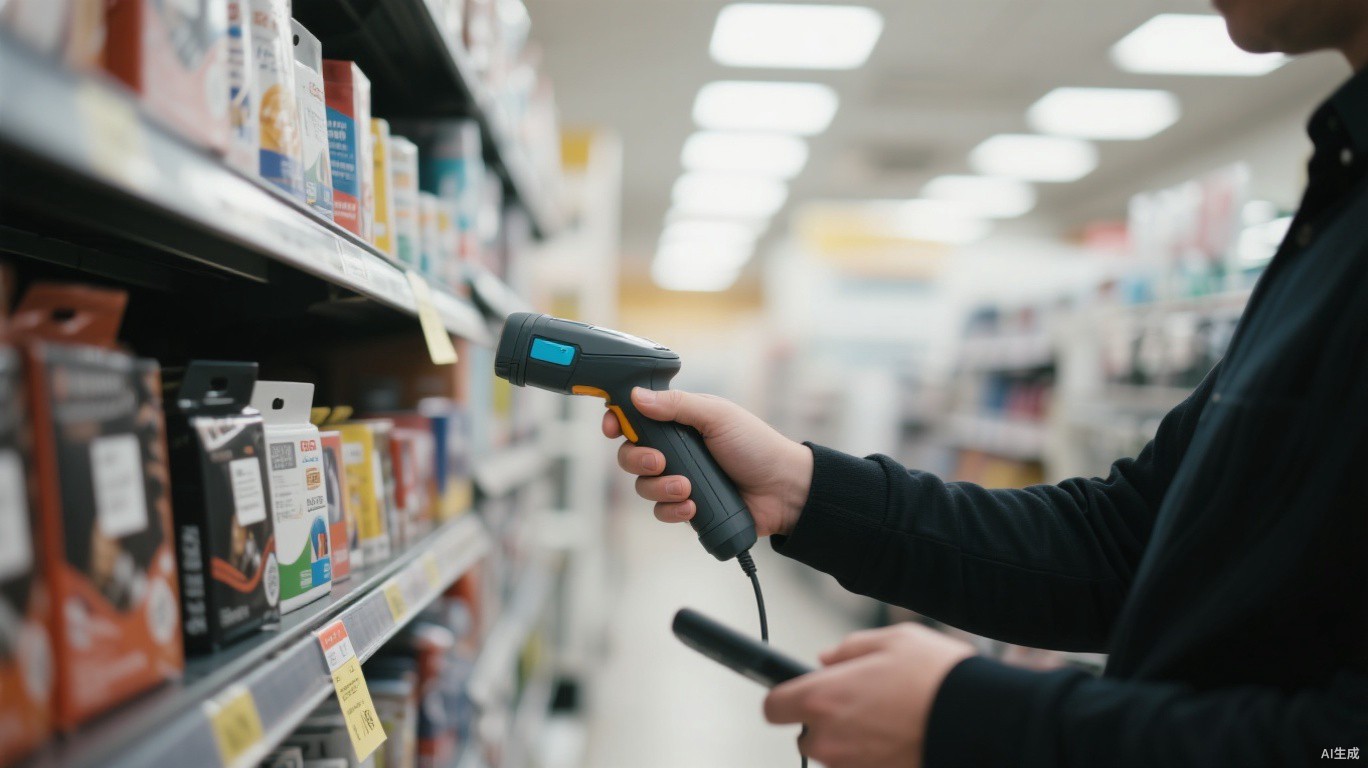
- Receiving put-away: handheld confirmation at the staging lane, linking carton EPCs to a location.
- Reserve storage aisles: overhead readers for background location confirmation, not for precise counting.
- Outbound staging: one portal per dispatch lane, confirming what left and on which vehicle.
- Returns and exceptions: a desk reader, deliberately small, so a returned carton is identified rather than assumed.
The sales-floor style "read everything constantly" approach was rejected early. Continuous reading in a metal racking environment produces so many duplicate events that the WMS becomes the bottleneck.
Aggregation is the actual project
The hardest part is not reading tags; it is maintaining parent-child relationships:
- Pallet to carton: established at build time by reading the cartons first, then writing the pallet licence plate. Never by manual entry.
- Carton to SKU and lot: established at receiving, from the supplier's label or from the ASN.
- Location to carton: established at put-away, and re-established whenever a carton moves.
- Order to carton: established at picking, then verified at the outbound portal.
Each relationship carries who created it, where, and when. Without that audit trail, a discrepancy cannot be investigated, only written off.
Two disciplines made the difference:
1. Read the child before writing the parent. A pallet that claims 60 cartons when only 58 were read is worse than an unlabelled pallet. 2. Treat repacking as an event. Every time a pallet is broken down or rebuilt, the old relationship must be closed and a new one opened. Most inventory drift in 3PLs comes from undocumented repacking.
Phased cutover
- Phase 1 (weeks 1–6): inbound only. Tag cartons at supplier or at receipt, portal at two doors, put-away confirmation. Outbound stays on barcodes.
- Phase 2 (weeks 7–12): outbound staging and dispatch verification. Picking remains barcode-driven but is verified by RFID at the lane.
- Phase 3 (weeks 13–20): reserve-location visibility and cycle counting. Blind counts are replaced by targeted counts driven by exceptions.
- Phase 4 (ongoing): supplier tagging at source, which removes the largest recurring labour cost.
Running both systems in parallel for a phase is not waste; it is how you prove the new one before removing the old one.
What the numbers looked like
After six months, measured against the same KPIs:
- Receiving time per trailer: 3–4 hours down to about 1–1.5 hours. The gain came from removing manual counting, not from faster reading.
- Inventory record accuracy: 87–92% up to 98.5–99.5% at SKU-location level, with discrepancies now traceable to a specific event.
- Dock-to-stock: 6–9 hours down to 2–3 hours, which recovered same-day dispatch capacity.
- Picking errors: down by roughly 70–80%, mostly because quantity is now verified at the outbound portal rather than trusted.
- Cycle counting labour: monthly full counts replaced by continuous targeted counts, with the same headcount covering more SKUs.
Payback in this profile landed in the 9–18 month range, driven mainly by labour and by reduced expedited freight. Treat that range as a planning assumption, not a promise: sites with low stockout cost or high tag attrition pay back more slowly.
Failure modes seen in similar projects
- Reading at the dock only. If put-away is not confirmed, the system knows a carton entered but not where it is.
- Trusting portal reads as location truth. A portal at a door reads everything nearby, including the pallet in the next lane.
- No exception workflow. RFID exposes discrepancies faster than the operation can resolve them; without a queue and an owner, operators start ignoring alerts.
- Tagging too late. Tagging at dispatch instead of at receipt removes most of the inventory benefit.
- Skipping the supplier conversation. Supplier-applied tags are the single largest long-term cost reduction, and they require a specification and a quality check, not just an email.
What to specify before you buy anything
- The exact read point list, with required zone and read rate for each.
- The aggregation rules, including repacking and partial pallets.
- The exception queue: who resolves what, within which SLA.
- The tag specification and application standard, including placement tolerance.
- The reconciliation report that proves RFID and WMS agree, and what happens when they do not.
Warehouse automation is not a hardware purchase. It is a data discipline with readers attached. The sites that succeed treat the first six months as a process project and the hardware as the easy part.