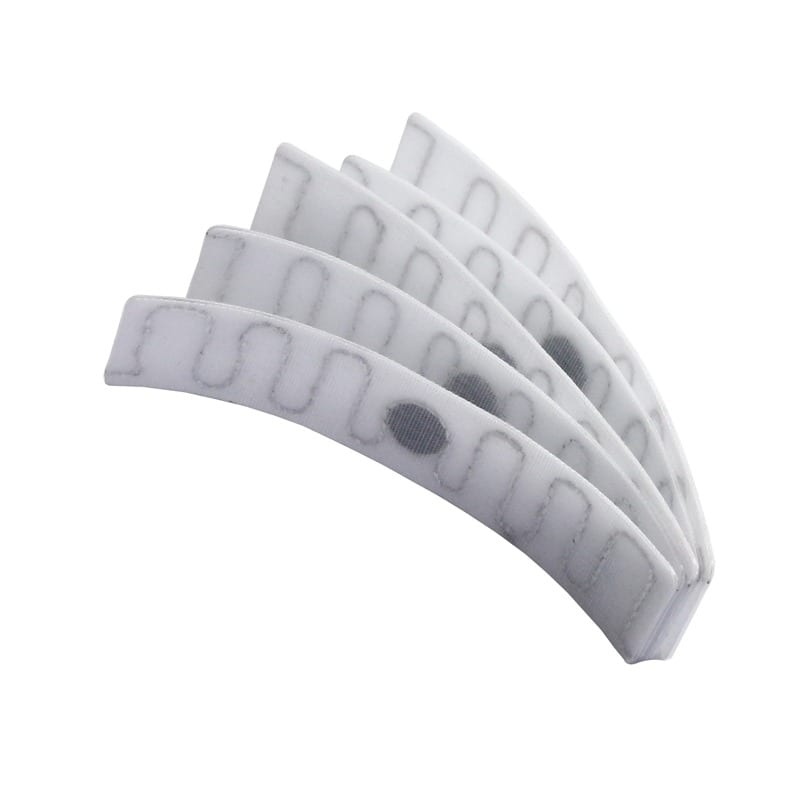
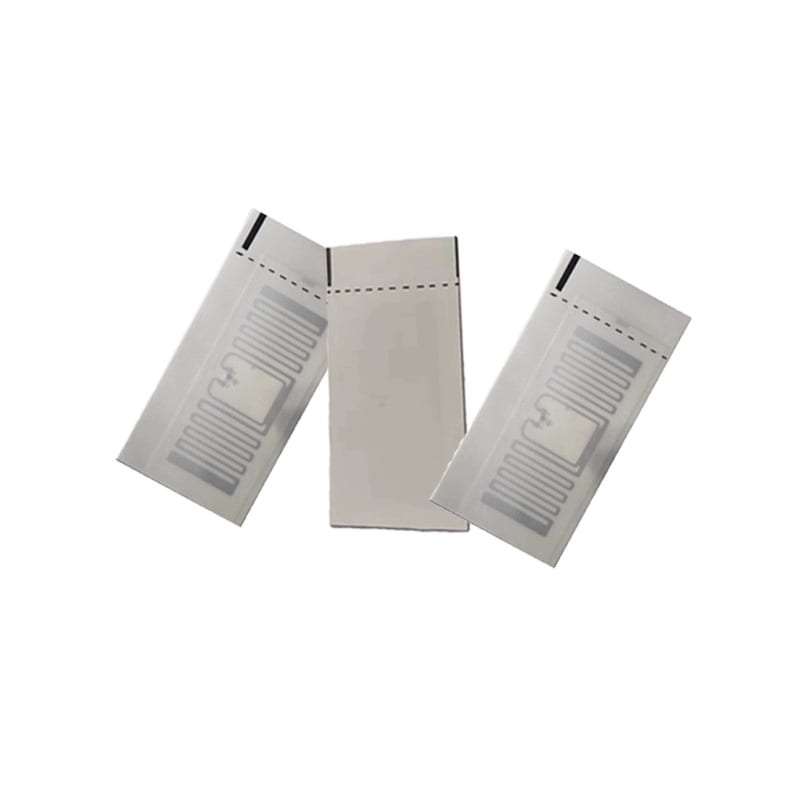
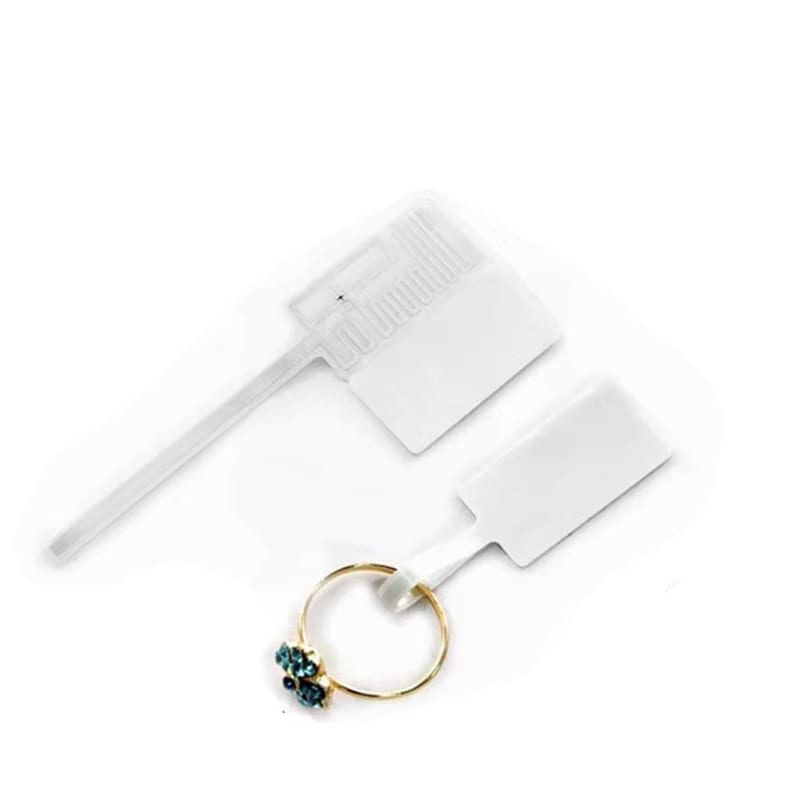
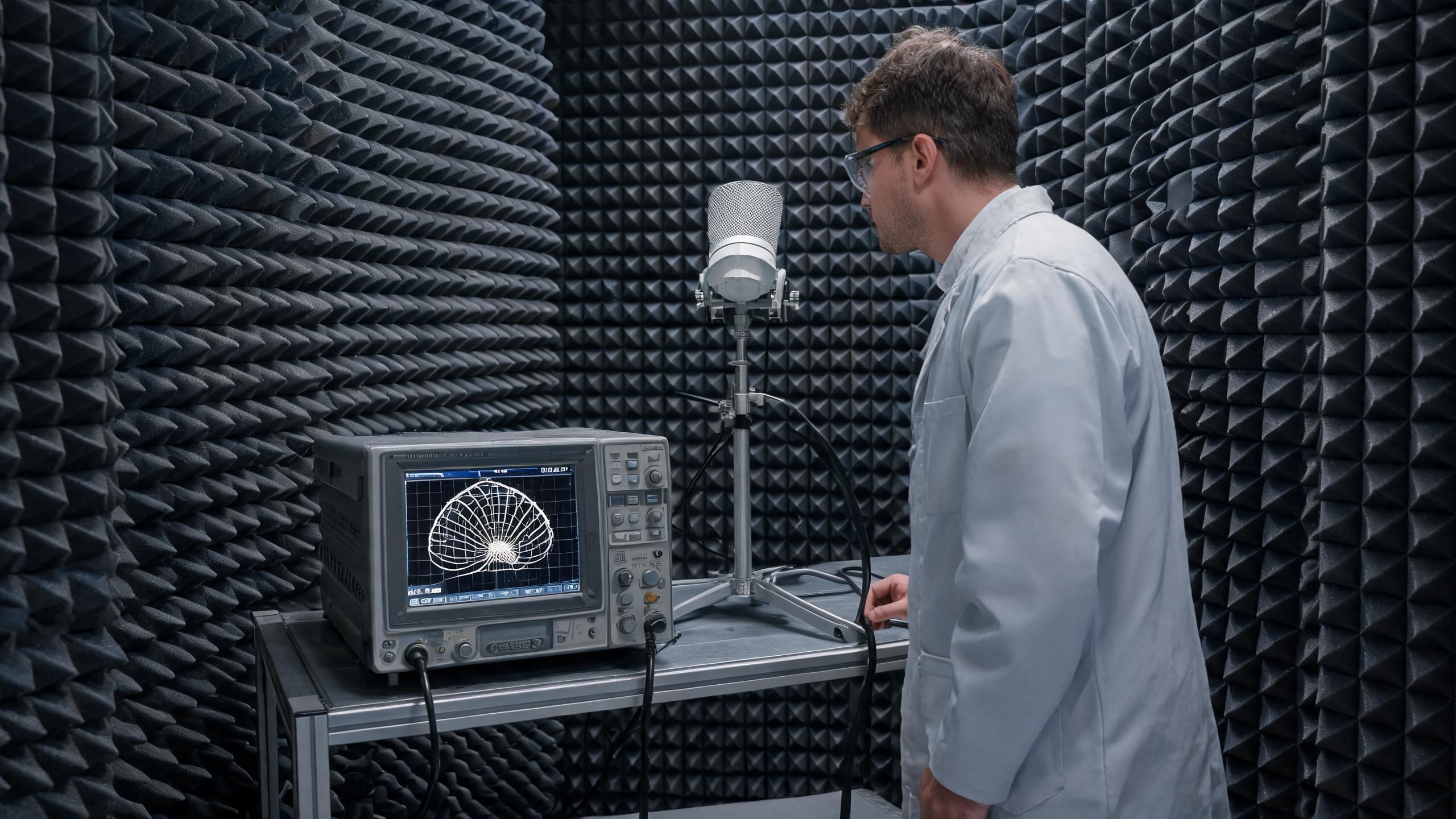
Two cartons sit on the same pallet. One label reports at six metres, the other at less than one. The chips are identical, the encoder is identical, and the difference is what the label is stuck to.
That is the dielectric constant at work, and it is the most common reason a pilot that worked in the meeting room fails in the aisle.
What the dielectric constant does to a tag
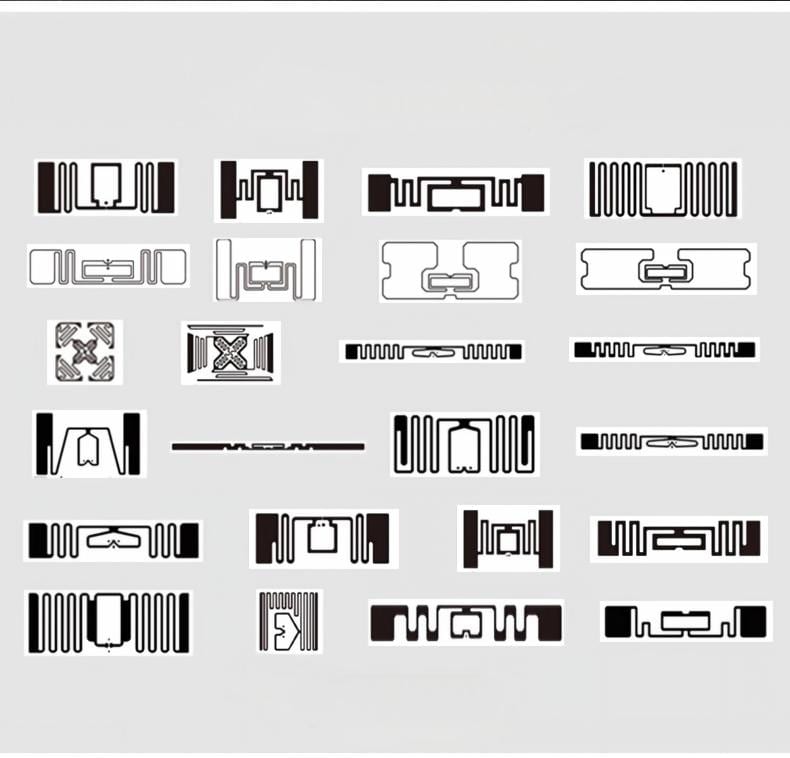
An RFID antenna is tuned for a medium, and the manufacturer tunes it for air.
- Relative permittivity describes how much a material slows and concentrates an electric field.
- Air is 1, paper and foam sit near 1.5, plastics around 2 to 4, glass around 5 to 7, water near 80.
- A higher permittivity shortens the effective wavelength under the antenna.
- The antenna becomes electrically too long, so its resonant frequency drops below the band.
- The result is a mismatch at 865 to 928 MHz that shows up as lost range and dead spots.
Detuning is a physical mechanism, not a bad batch
When a tag fails on one product and works on another, the tag is usually innocent.
- The material under the inlay changes the antenna's capacitance and inductance.
- Resonance shifts downward by tens of megahertz on glass and far more on water.
- The shift narrows the usable bandwidth, so a tag that just passed now barely reads.
- Absorptive materials convert radio energy into heat, which reduces range independently.
- Thick materials can also block the field, so geometry matters as much as permittivity.
Common host materials and what to expect
Most failures come from four materials, and each has a known behaviour.
- Cardboard and wood are mild: a standard label usually works, with a modest range loss.
- Glass detunes noticeably; reads improve when the tag sits at the edge or on a curved surface.
- Plastics vary widely; PET is tolerable, but carbon-loaded plastics can kill the field.
- Liquids are the worst case, because water both detunes and absorbs.
- Metal does not detune so much as short the antenna, which is why on-metal tags exist.
Why liquids deserve their own design
A bottle of water is a lens, a load and a shield at the same time.
- Permittivity near 80 pulls the resonance far below the UHF band.
- The loss tangent of a liquid turns the product into an absorber at close range.
- Reads get better as the tag moves up the bottle, away from the liquid line.
- Tagging the outer case or the shrink wrap beats tagging individual bottles.
- Angling the tag or using a flag-style construction keeps the antenna off the surface.
Label construction is part of the antenna
The inlay is only half the product; the adhesive, spacer and face sheet complete it.
- A foam spacer of one to three millimetres is the cheapest way to survive glass and metal.
- The spacer must be low-loss; a dense adhesive can absorb more than it separates.
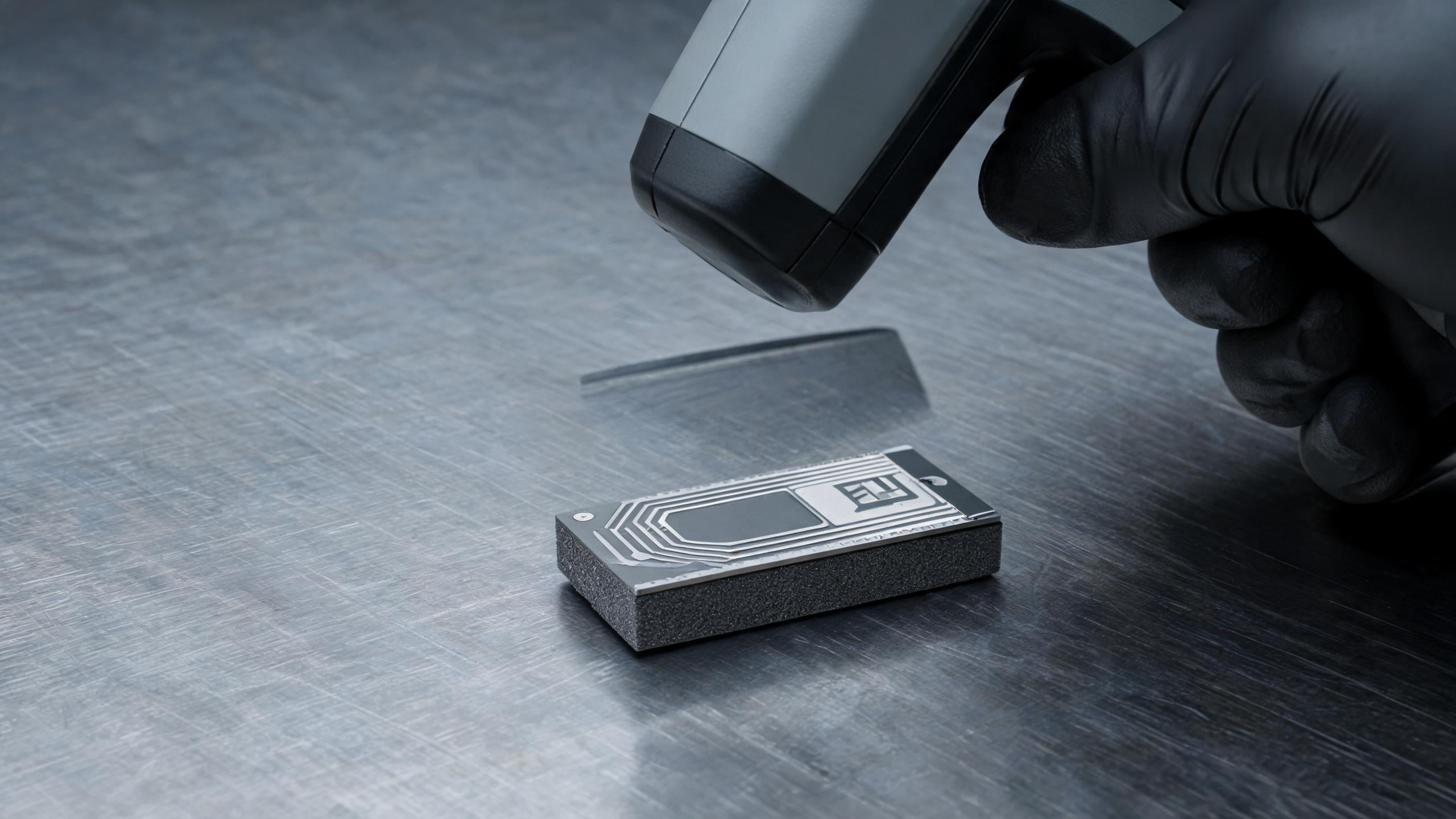
- On-metal tags use an isolated antenna plus a ground plane, or a magnetic absorber layer.
- Ceramic patch tags are compact and stable but heavier and more expensive.
- A label qualified only on cardboard has no evidence for any other substrate.
Test on the product, not on the datasheet
Datasheet ranges are measured on a reference surface, which your shelf is not.
- Build a test kit with the actual products, in the actual orientation, at the actual spacing.
- Sweep reader power and record the read rate at the distance you will really operate.
- Test the worst orientation, not the one the installer finds convenient.
- Measure with neighbouring products loaded, because a full shelf behaves differently from one item.
- Keep the worst case in the acceptance criteria, and document the surface used.
Placement rules that survive contact with reality
A few centimetres decide whether a shelf reads reliably.
- Keep at least a centimetre of separation from metal frames, rails and wire mesh.
- Place the tag on the face that the reader antenna actually illuminates.
- Align the tag's long axis with the reader's polarisation where orientation is controlled.
- Avoid the liquid fill line, the bottom of a drum and the inside of a curved rim.
- Do not crease the inlay; a bend can shift the resonance as much as the substrate.
When to change the tag and when to change the reader
Not every read problem is solved by a more expensive label.
- If the surface detunes the tag, a spacer or an on-metal design is the correct fix.
- If the geometry hides the tag, add an antenna or change the mounting, not the inlay.
- If the environment is dense with tags, enable dense-reader mode and tune session behaviour.
- If the product absorbs energy, reduce the read distance and increase antenna density.
- Raising power helps only until regulations or neighbouring readers stop you.
Humidity, ice and temperature change the answer
The datasheet assumes a dry label at room temperature, and few supply chains offer that.
- A film of condensation is a thin, high-permittivity layer directly under the antenna.
- Ice sits near 3 to 4, but pockets of unfrozen water inside a frozen product behave far worse.
- Adhesive stiffens at minus twenty and can lift the spacer, changing the coupling silently.
- Cold-chain pallets often read worst as they leave the freezer, not when they arrive.
- Test at the temperature and humidity the product actually sees, and record both with the read rate.
Acceptance, documentation and the handover
The deliverable is a tested combination of label, surface, position and reader setting.
- Record the exact product, the tag part number, the spacer, the orientation and the read rate.
- State the test power, the antenna model and the distance, or the result is not reproducible.
- Include a failure criterion, such as a minimum read rate over a hundred passes.
- Re-test when the packaging changes, because a new bottle shape is a new RF problem.
- Hand the substrate data to the next site, so the same lesson is not paid for twice.