When a deployment misses tags, the first instinct is to change hardware. In practice most shortfalls come from where the label was applied. Three variables decide the outcome, and only one of them is usually under control at the packing line.
Surface, orientation and clearance. Get them right and a cheap inlay reads at 6 metres; get them wrong and an expensive on-metal tag reads at 40 centimetres.
Why does placement outweigh tag choice?
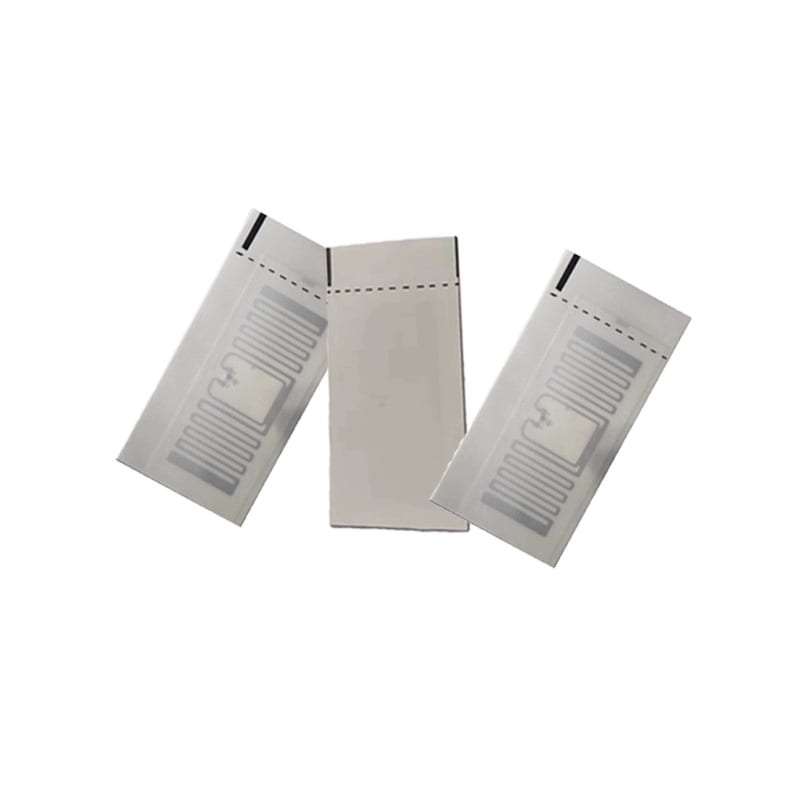
A tag antenna is a resonant structure that depends on its electromagnetic surroundings. What is behind it, what is beside it, and which way it faces change its resonant frequency, its radiation pattern and its efficiency.
Two inlays with the same chip can differ by 6 dB purely because one sits on a flat carton face and the other is wrapped around a corner. That is a factor of four in power, which is the difference between a comfortable read and an intermittent one.
- Placement can change read range by 2–10 dB on the same tag.
- The effect is larger than the difference between most chip generations.
- It is free to fix, and almost never measured.
What are the three rules?
The rules are deliberately simple, because they must be executed by people at a packing line, not by RF engineers.
Rule one, surface: apply to a flat area large enough to hold the tag without wrinkles, at least 20 mm from any edge or seam. Rule two, orientation: the tag's long axis should be parallel to the antenna's polarization as it will be seen at the read point. Rule three, clearance: keep 30 mm or more from metal, liquid, dense foam and other tags, or use a spacer.
- Flat, 20 mm from edges, no wrinkles.
- Aligned to the likely read antenna, not to the carton printing.
- Clear of metal and of the next tag: 30 mm minimum, 50 mm preferred.
Where should a tag go on a carton?
On a pallet, the operative question is which face the reader will see. For a dock door with side antennas, that is the vertical face at the outer corner. Put the tag 50–100 mm from the top edge of that face, on the side that faces the aisle, not the side facing the pallet next door.
Do not place on the top face unless the reader is overhead. Avoid the seam where two cartons meet, because the adjacent carton detunes the tag and blocks the line of sight.
- Side face, outer corner, 50–100 mm from the top edge.
- One tag per carton, same position on every carton — consistency beats optimisation.
- Never on the joint between two cases.
Where should a tag go on apparel and soft goods?
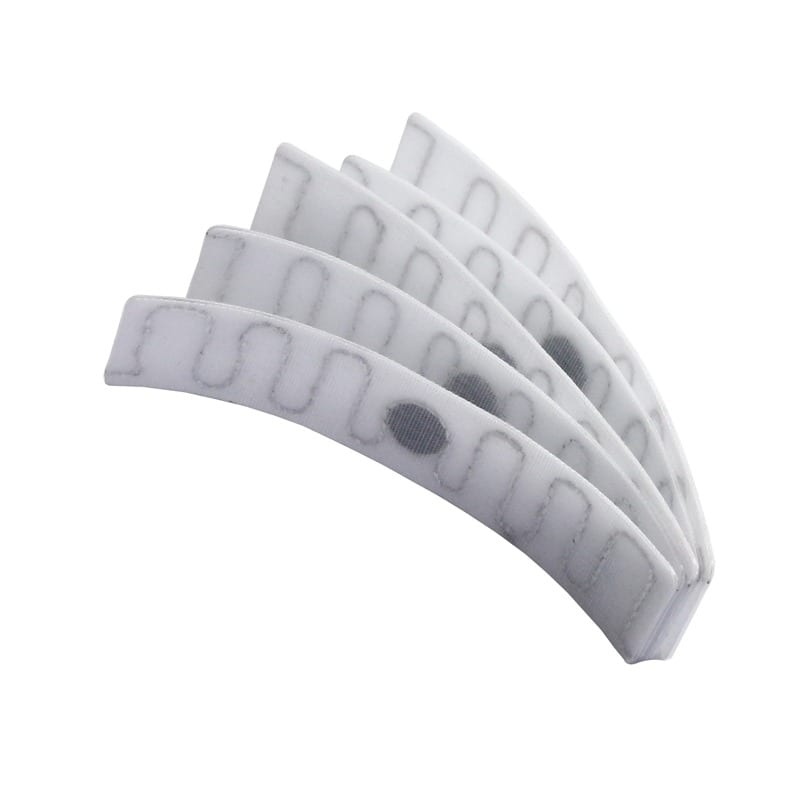
Apparel tags are usually sewn into a woven label or attached to a hang tag, which solves the placement problem by making it uniform. The engineering then moves to the material: a metallised woven label or a foil print can detune the inlay badly.
Test on the finished garment, folded and unfolded, because folding changes the antenna geometry and the read performance. On a rail, the tag should face outward; on a folded stack, the tags must not overlap.
- Woven label: verify the metallised yarn does not kill the inlay.
- Hang tag: keep it from folding over the inlay during packing.
- Rail: tags facing outward, 30 mm apart minimum.
What changes on metal, liquid and curved surfaces?
Metal reflects and shorts; liquid absorbs and detunes. Curvature bends the antenna and shifts its resonance. Each has a standard remedy, and each remedy has a cost.
- Metal: on-metal tag with ferrite or a foam standoff of 5–10 mm. Never a standard paper label.
- Liquid: keep the tag on the side away from the liquid, or use a spacer of 5 mm or more.
- Curved: use a flexible inlay rated for the radius, and avoid the point of maximum curvature.
- Dense packs of tags: stagger positions so no two tags sit directly opposite each other.
How do you validate placement on a real pallet?
Build the pallet the way operations builds it, then measure, then change one variable at a time.
- Mark the candidate positions with tape and tag all cartons in the same position.
- Read with the actual reader, at the actual speed, 100 passes minimum.
- Record read rate per position, not just overall.
- Repeat with the pallet rotated 90 degrees — orientation is the variable most often missed.
If one position reads 99 % and another 82 %, the placement decision is worth more than any reader upgrade you are considering.
Bottom line
Surface, orientation and clearance. Standardise one position per SKU, mark it on the packing specification, and audit it quarterly. Placement is the cheapest performance lever in RFID and the one most often left to chance.