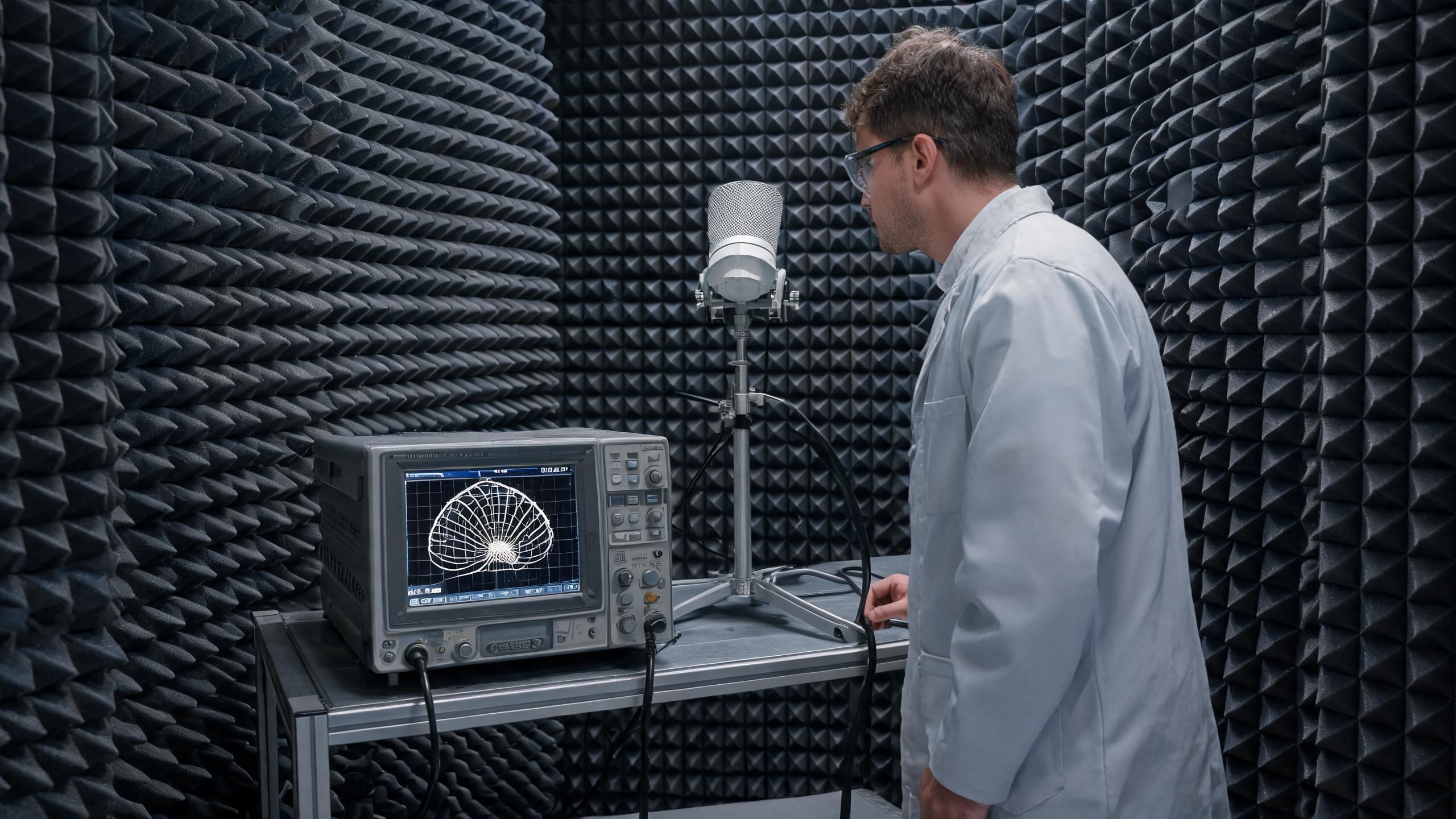
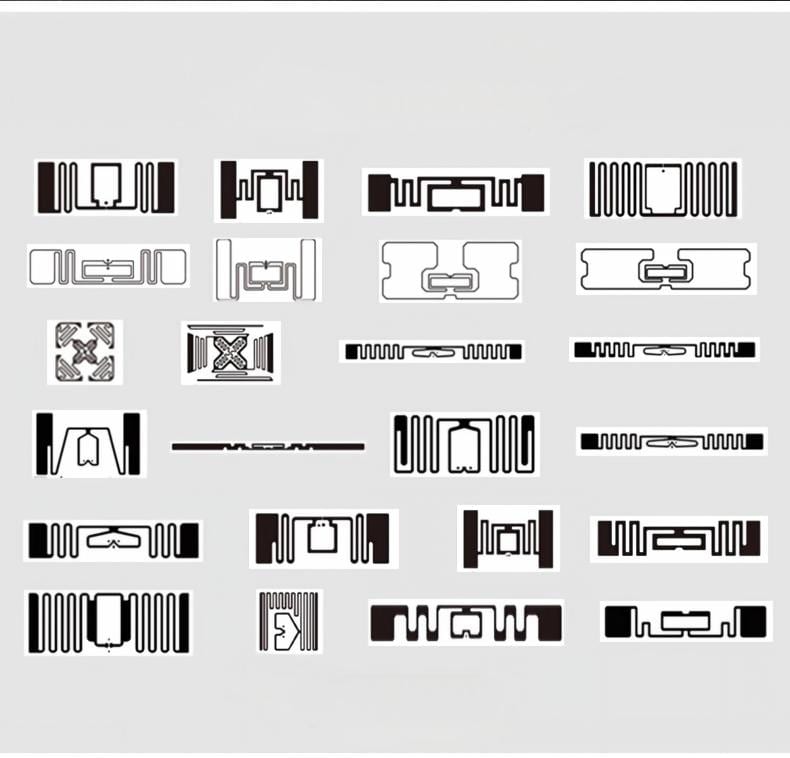
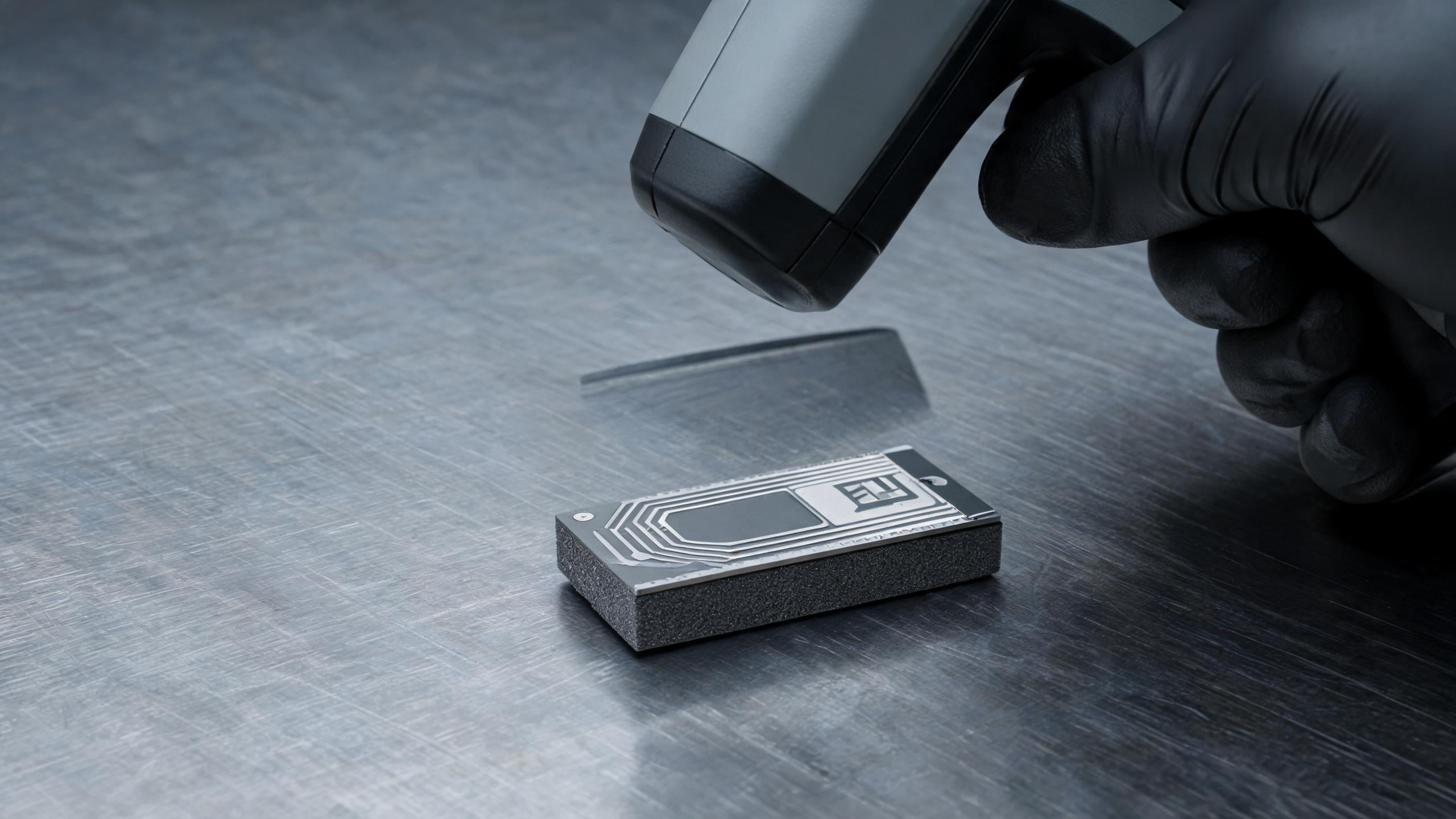
Two radio technologies, one building, and a procurement team that has already bought both. UHF tracks what the business owns; NFC lets a person with a phone ask a question about one object. They are not competitors, and they are not the same system wearing two hats.
The engineering is easier than the politics. UHF at 860 to 960 megahertz and NFC at 13.56 megahertz are three orders of magnitude apart, and they do not interfere in any way that matters.
Two radios, two jobs
The first design decision is to stop asking which technology is better.
- UHF is a far-field technology: metres of range, many tags per second, no human intent required.
- NFC is a near-field technology: centimetres of range, one tag at a time, and physical intent is the whole point.
- UHF answers "what is here"; NFC answers "is this the one in my hand".
- UHF belongs to operations: receiving, counting, picking, shipping.
- NFC belongs to people: staff authentication, consumer information, service history, proof of presence.
What actually interferes, and what does not
Most coexistence fear is misplaced, and the small real effects are easy to manage.
- The two bands are far apart, so receivers do not desensitise each other; there is no practical co-channel problem.
- UHF reader output can disturb sensitive analogue circuits nearby, so keep readers away from scales and medical devices.
- Metal and liquid change both fields, so a mounting position that works for UHF may be poor for an NFC tap point.
- A phone case, a hand or a counter surface changes NFC coupling far more than any UHF reader does.
- The realistic conflict is physical: two antennas competing for the same square centimetres of a label or a door.
Shared tags and dual-frequency inlays
The idea of one label that serves both is attractive and more expensive than it looks.
- A dual-frequency inlay carries a UHF antenna and an HF loop, and the two are not electrically independent.
- The HF loop is usually the larger structure, which constrains how small the label can become.
- Cost is typically a multiple of a single-frequency inlay, so use it where the overlap is genuinely valuable.
- Read range on both sides is usually reduced compared with a dedicated inlay of the same size.
- A better pattern is often two labels in two places, each optimised for its own reader.
The phone is the second reader
Treat every phone as an unmanaged reader with unknown antenna behaviour.
- Phone NFC performance varies by model, case and how the user holds it; design for the worst common phone.
- Tap points need a visual target; without one, users hunt and conclude the system is broken.
- The phone reads the tag but does not need to be the system of record; send it to a service, not to the ERP.
- Test with at least five phone models, including a thick case and a low battery state.
- Never rely on NFC for a mandatory operational step unless a fallback path exists.
Placement when both are needed
Placement is where the two technologies actually compete, and it is decided in millimetres.
- Put the UHF inlay where the reader's field is strongest, typically facing the aisle.
- Put the NFC tap point where a hand naturally arrives, typically at the front face or the top edge.
- Keep both away from metal edges and from the seam where fabric flexes.
- If one label must serve both, place it where neither field is at its worst; the compromise is measurable.
- Mark the NFC zone on the product or fixture, because "somewhere near here" is not an installation.
One identity, two access paths
The data model should make the technology interchangeable at the edges.
- Use a single object identifier in the ERP, and store technology-specific identifiers as attributes.
- The EPC and the NFC identifier should both resolve to the same business object, never to two records.
- Log which path was used for each event, because support and analytics need to separate them.
- Make the write path idempotent on both sides, since a phone can retry a submission.
- Design the API so a future technology can be added without changing the object model.
Privacy and consent on the NFC side
NFC invites a person to interact, which changes the compliance picture.
- A consumer tap should reveal information, not enrol the person; separate the two explicitly.
- Do not write personal data to a tag that a customer can take home.
- Publish what a tap does before it does it, in one sentence a shopper can read.
- Staff authentication taps are personal data processing, so log access, retention and purpose.
- NFC tags can be cloned; never treat a tag alone as proof of identity for anything valuable.
Testing a mixed deployment
Test the combination, not the components, because the failures live in the overlap.
- Walk the site with both a UHF reader and a phone, and record where each one disappoints.
- Test tap points under the real counter or fixture material, not on a bare desk.
- Verify that both paths produce the same business object under load and under retry.
- Check battery and thermal behaviour when a phone is used for taps all day.
- Include a "phone not available" drill; the operational process must survive without it.
Costing the overlap
A mixed deployment is justified by a business case, not by enthusiasm for both technologies.
- Count the objects that genuinely need both: those, not the whole estate, carry the dual-tag cost.
- Compare a dual-frequency inlay against two single labels plus the labour to apply both.
- Add the phone-side cost: support calls, tap-point printing and app maintenance.
- Price the failure modes: a tap point that does not work costs a customer, not a scan.
- If the overlap is under a fifth of the estate, two separate labels usually win on cost.
When not to mix them
Sometimes the honest answer is one technology and a clear reason.
- If no customer or staff member ever needs to ask about one object, NFC adds cost without value.
- If the process requires hands-free throughput, a tap point will be the bottleneck.
- If the item is metal or liquid and the label must be tiny, neither technology will perform well.
- If the only NFC use case is a marketing page, a printed QR code is cheaper and more durable.
- Choose mixing where the two jobs are genuinely different, and say so in the deployment document.