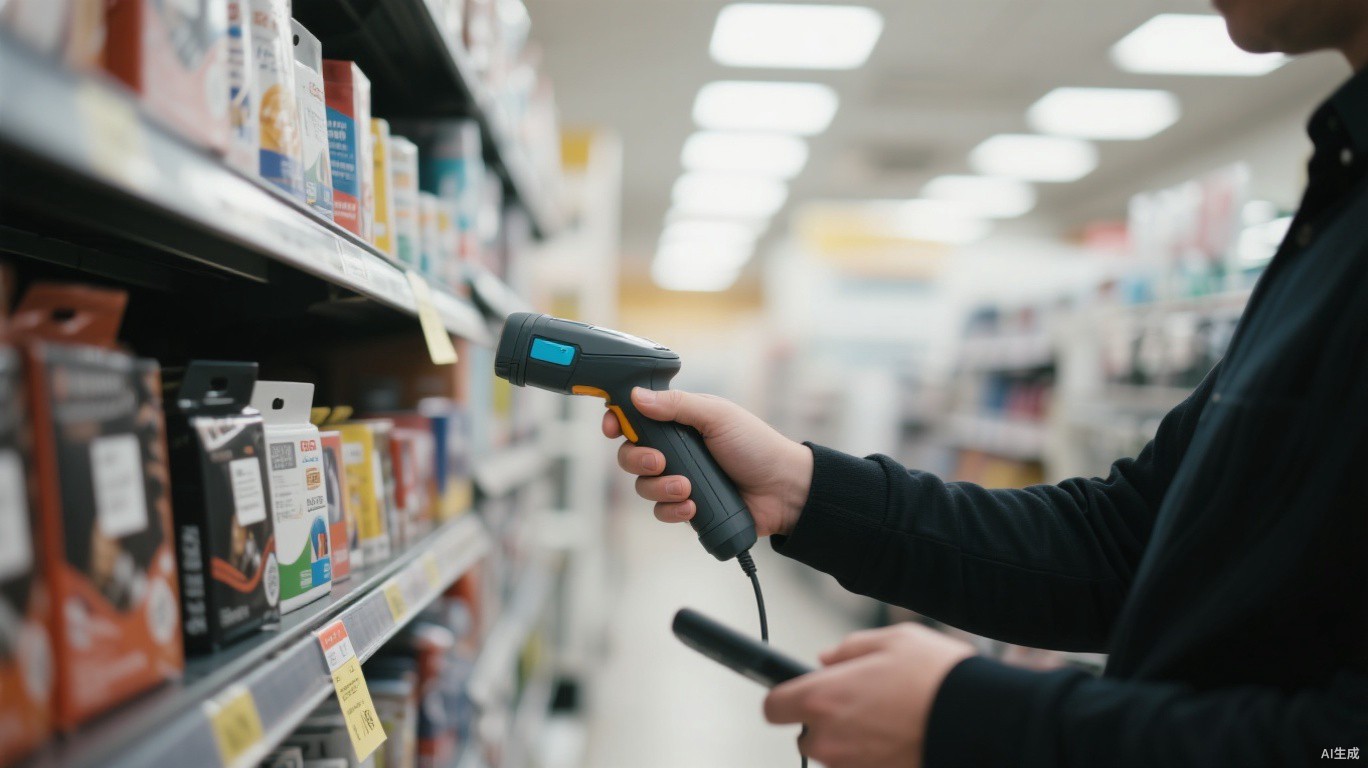
Inventory AI has a data problem that is routinely mistaken for an algorithm problem. Forecasting papers assume a dense, regular time series; a retail shelf or a hospital store room produces a sparse, late and occasionally wrong one. A quarterly cycle count is a photograph. A model trained on photographs cannot tell you what happened at 14:20 on a Tuesday.
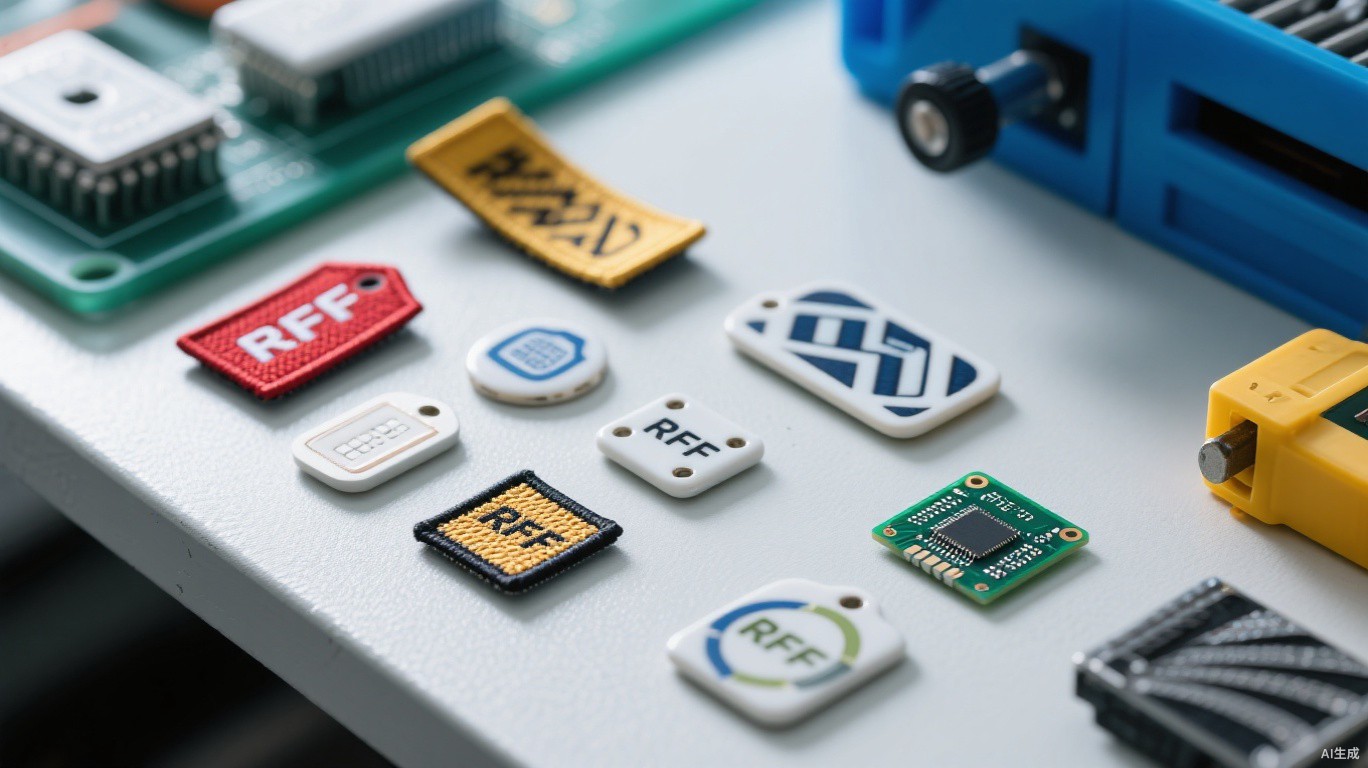
RFID changes the input rather than the model. It turns inventory state from a periodic photograph into a continuous stream, and that stream is what makes prediction, anomaly detection and dynamic replenishment trainable at all. The value is not that the AI becomes cleverer; it is that the data finally supports the questions people were already asking.
Why RFID is the only training set inventory AI can use
The binding constraint is sample density, and it is arithmetic rather than opinion.
- A quarterly count gives four observations per SKU per year; a shelf reader gives thousands.
- Labels have to come from physics, not from a clerk: a read is an observation, a count is an opinion.
- Coverage beats precision: a model that sees ninety percent of movements hourly outperforms a perfect count every quarter.
- The natural unit of training is item-location-time, which is exactly what a read event already is.
- Barcode data can only be made dense by adding labour that scales with SKU count; RFID does not scale that way.
Prediction: from monthly SKU forecasts to hourly shelf forecasts
Forecast granularity follows data granularity, and the business case follows forecast granularity.
- Monthly SKU forecasts drive purchase orders; hourly store forecasts drive replenishment and labour.
- The useful features are unglamorous: on-shelf quantity now, rate of change, time since last replenishment, recent sales.
- A forecast that is right on average and wrong at the peak is useless for staffing, so error is reported per interval.
- Intermittent demand — the slow mover that sells twice a week — is where naive models fail and shelf data helps most.
- Forecast value is realised only if the ordering system can consume a new cadence; many cannot, and that is the real project.
Anomaly detection: finding the small fraction that costs the most
Shrink, misplacement and phantom stock are rare events with large consequences, which is the definition of an anomaly problem.
- A missing item is not a data error; it is a physical event that deserves a cause code.
- Separate three signals: item absent but record present, item present but record absent, and item in the wrong place.
- Threshold alerts on absolute counts fail, because a large store has large counts; model the residual against forecast instead.
- A 0.4 percent shrink rate looks small until it is applied to a category with a six percent margin.
- False positives destroy adoption faster than missed detections, so tune for precision first and widen later.
The label problem: no ground truth, no model
Supervised learning needs labels, and inventory has an awkward relationship with truth.
- The ERP record is not ground truth; it is the thing being predicted, and sometimes it is the thing that is wrong.
- A physical audit gives truth but disrupts the process it measures, so audits must be sampled and treated as calibration.
- Store the event, not only the conclusion: raw reads, deduplicated reads and the resolved state should all be retained.
- When a human corrects a record, capture the correction as a labelled example instead of overwriting history.
- Accept that a model is a hypothesis about the process; when the process changes, the hypothesis has to be retired.
Replenishment: turning a forecast into an order decision
The gap between a good forecast and a good order is where most inventory AI projects quietly die.
- Ordering is a constrained decision: shelf capacity, case pack, lead time, minimum presentation and cash.
- The model should output a distribution, not a point; the order policy then picks a service level from that distribution.
- Separate the cadences: forecast hourly, order daily, review weekly.
- Every automated order needs a guardrail — a maximum daily change, a minimum presentation, and a logged human override.
- Measure the decision, not the forecast: fill rate, out-of-stock hours and inventory turns are the scoreboard.
What breaks: drift, feedback loops and the cold-start shelf
Models fail in ways that are specific to inventory, and the failures are predictable.
- Promotions, planogram resets and season transitions change the process, not merely its level.
- A replenishment model trained on its own past orders learns its own mistakes, a loop that accuracy metrics cannot see.
- New items have no history, so cold start must be handled by rules, not by a model that has never met the item.
- Reader outages create artificial stockouts in the data; unflagged, the model learns a false demand pattern.
- Shelf accuracy decays with tag loss, so tag health is a model input, not an operational footnote.
Governance: who approves an AI-driven order
Automation without accountability is a liability, and retail has learned this the hard way.
- Name the decision owner before the model goes live; the system decided is not an acceptable answer in a review.
- Keep an auditable chain from recommendation to order to outcome, with the model version attached.
- Publish known failure modes to the buyers who use the output, in their language rather than in metric names.
- Set a human review threshold: below a value automatic, above it a person approves.
- Retire models on a schedule, not on a scandal.
A staged build that produces value before the model is good
Sequence matters more than sophistication, because each stage funds the next.
- Stage one: instrument the shelf and fix the record. Without accurate state nothing downstream can be evaluated.
- Stage two: detection, not prediction. Simple rules catch the events that cost money today.
- Stage three: forecasting on clean history, measured against the rule-based baseline.
- Stage four: constrained ordering with human approval, measured on fill rate and turns.
- Stage five: closed-loop tuning, once the feedback loop is understood well enough to be controlled.
Every stage has to produce a business result before the next one starts. That is the only way an inventory AI programme survives its second budget review.