NFC and RFID are compared so often that the comparison has become its own product category. The first fact to settle is that NFC is RFID: it is a subset of high-frequency RFID defined by ISO/IEC 14443 and 18092, with a fixed command structure, a range of a few centimetres and an explicit transaction model. What industry usually calls RFID is UHF RAIN RFID at 860 to 960 MHz, which behaves almost nothing like it.
The useful question is therefore not which technology is superior, but which interaction model your process already has. Count one item or a thousand? Does the operator carry a phone, or walk past a fixed portal with both hands full? Answer those two questions and the frequency follows.
NFC is RFID seen through a keyhole
The specification explains the behaviour better than any comparison chart.
- NFC operates at 13.56 MHz, with a working distance of roughly 4 centimetres, occasionally 10 with a large antenna.
- It defines three modes: reader-writer, card emulation and peer-to-peer. A phone can play any of them.
- Data is usually stored in NDEF records, a small, standardised payload that any smartphone can read without an app.
- One initiator talks to one target at a time. There is no anti-collision problem because there is no crowd.
- The short range is the security model: an eavesdropper has to be within centimetres, and the user's intent is a physical tap.
UHF RFID is a different animal
RAIN RFID is built for distance and volume, and its design choices follow from that.
- UHF operates at 860 to 960 MHz, with passive read ranges from one metre to twelve metres depending on antenna, power and environment.
- The reader runs an inventory round: it selects a population, singulates tags and reads EPCs, hundreds per second.
- Tags are battery-free and backscatter the carrier; the reader supplies the energy.
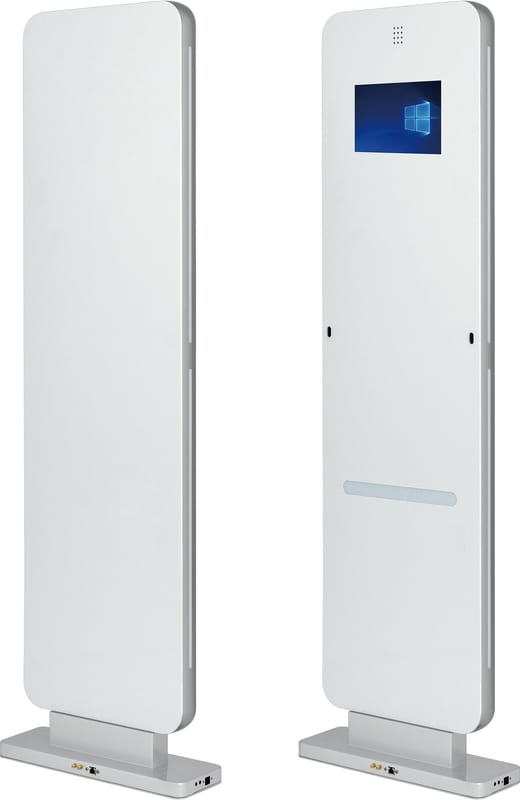
- There is no standard phone reader. Infrastructure is fixed readers, portals and handhelds.
- The transaction is not a tap but a stream of observations, which is why middleware exists.
Where NFC wins
NFC is the right choice when the interaction is deliberate and the object is singular.
- Payments, transit and access control, where a tap is the product.
- Consumer engagement: a tag on a bottle, a poster or a machine that opens a page or pairs a device.
- Service and maintenance records on equipment, read and written with a technician's phone.
- Consumable authentication and warranty registration, where a unique, writable record travels with the item.
- Patient wristbands, event badges and hotel keys, where the credential must be presented, not just detected.
- Anywhere installing readers would be disproportionate: a few hundred assets and a phone is enough.
Where UHF wins
UHF exists because counting is expensive and hands are busy.
- Bulk inventory: a thousand garments on a rack, or a pallet of cartons, read in seconds.
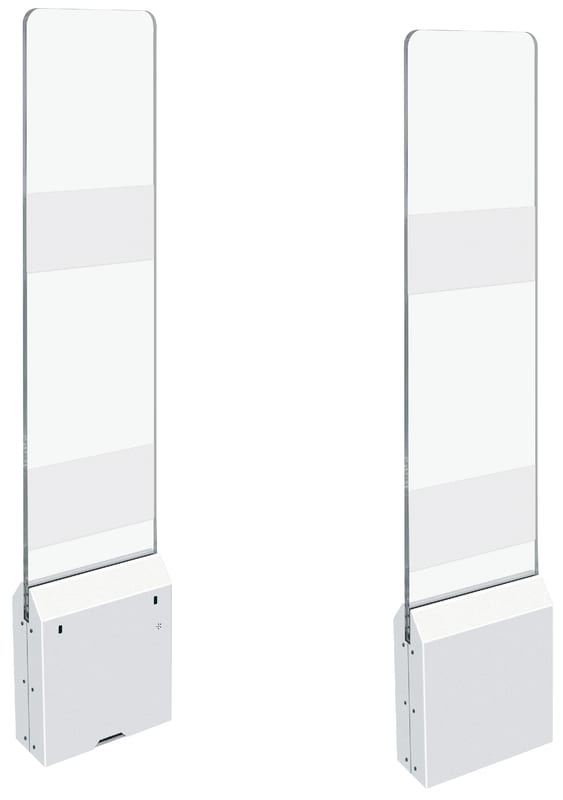
- Dock doors and conveyor portals, where goods pass without a person stopping.
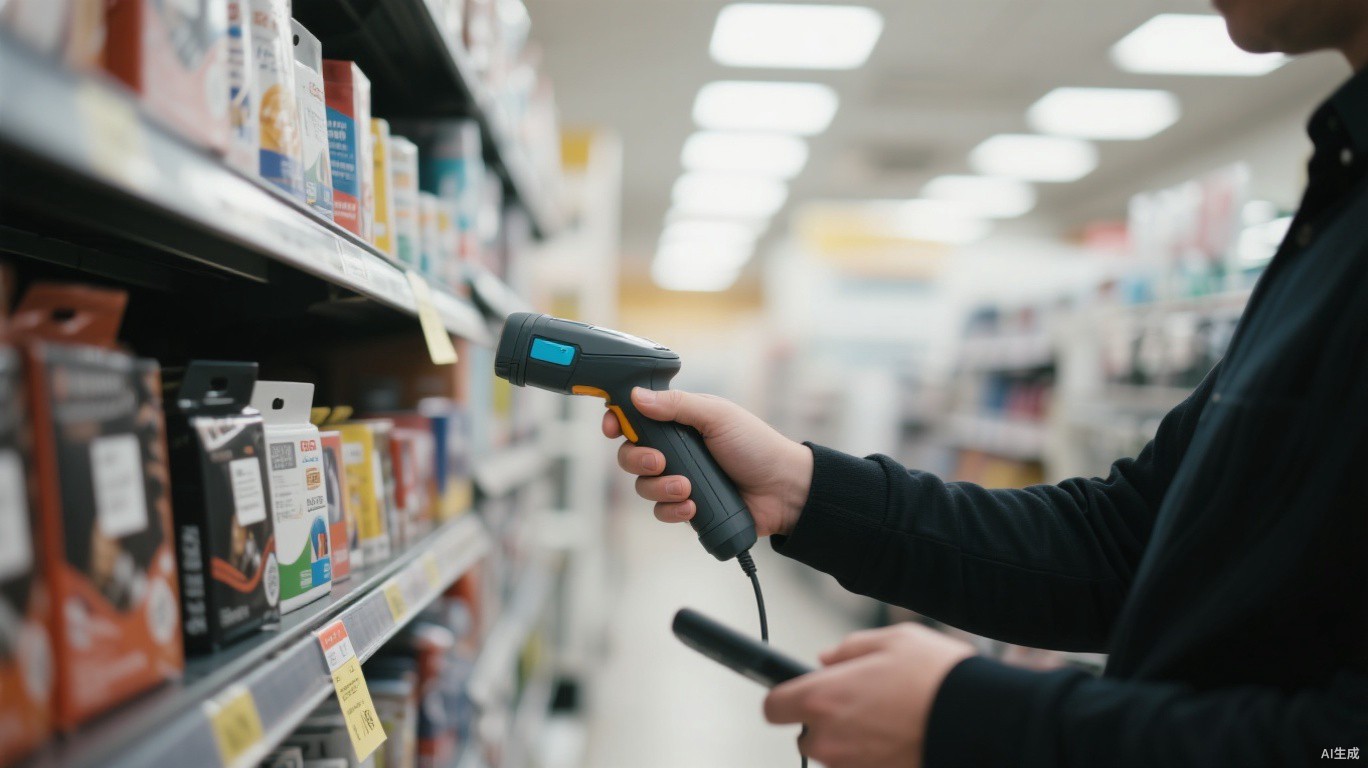
- Asset registers across a building, a yard or a campus, read by a handheld on a walk-through.
- Laundry, tooling, returnable transport items, where the same tag survives hundreds of cycles.
- Any process where the value comes from completeness rather than from a deliberate gesture.
The overlap that confuses procurement
Both technologies can be sold as "asset tracking", which is where most bad decisions start.
- A single high-value instrument checked out by a technician is an NFC conversation; a store room of 2,000 parts is a UHF count.
- If the workflow already runs on phones, NFC removes the hardware budget and the integration project.
- If the workflow is a dock door, NFC forces a deliberate tap that will not happen at 400 pallets a day.
- A dual-technology site is legitimate, but it is two projects: NFC for service access, UHF for inventory.
- Choose per process, not per company. A single standard imposed everywhere usually fails at one of the two ends.
A selection matrix that survives review
Write the answers down before comparing quotes.
- Items per event: one or two points to NFC; tens to thousands point to UHF.
- Distance: contact or a few centimetres is NFC; one metre and beyond is UHF.
- Operator device: a smartphone is NFC; a fixed reader or handheld is UHF.
- Environment: metal and liquid challenge UHF; NFC's short range makes it easier to control.
- Data: a small record written back to the tag favours NFC; read-only identity at volume favours UHF.
- Infrastructure budget: NFC needs none; UHF needs readers, cabling, middleware and commissioning.
- Security requirement: NFC's proximity helps, but relay attacks exist; UHF needs TID checks, passwords or cryptographic tags.
Security assumptions differ, and both are modest
Neither technology is a trust anchor by itself.
- NFC's short range reduces passive eavesdropping but does not stop a relay or a cloned tag.
- UHF EPC values are trivially copyable; use the TID, access passwords or authenticated tags where value is at stake.
- Both need a backend that validates the tag against a registry rather than trusting the number.
- Treat the tag as an identifier with a confidence level, not as proof of authenticity.
- Design the failure mode: what happens when a tag is missing, cloned or unreadable, is more important than the cipher.
The honest summary is that NFC is a transaction technology and UHF is an observation technology. Pick the one that matches the gesture your process can actually perform, and stop treating the comparison as a matter of taste.