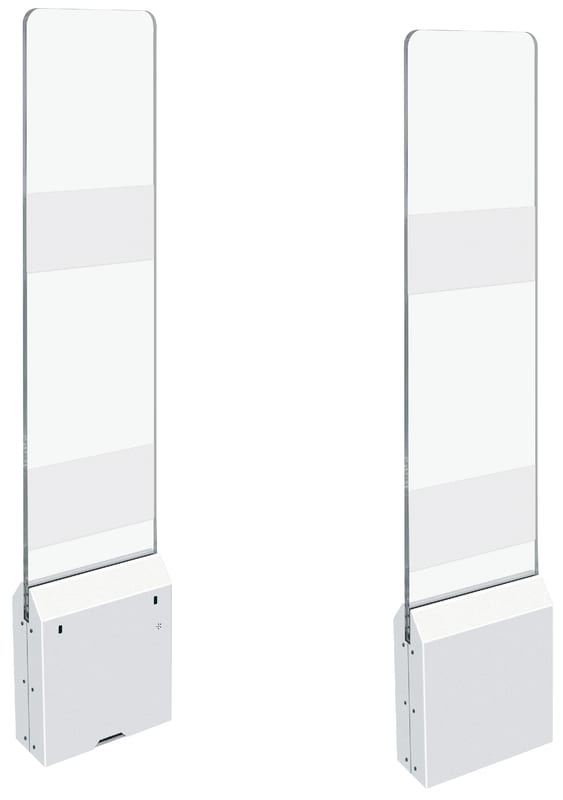
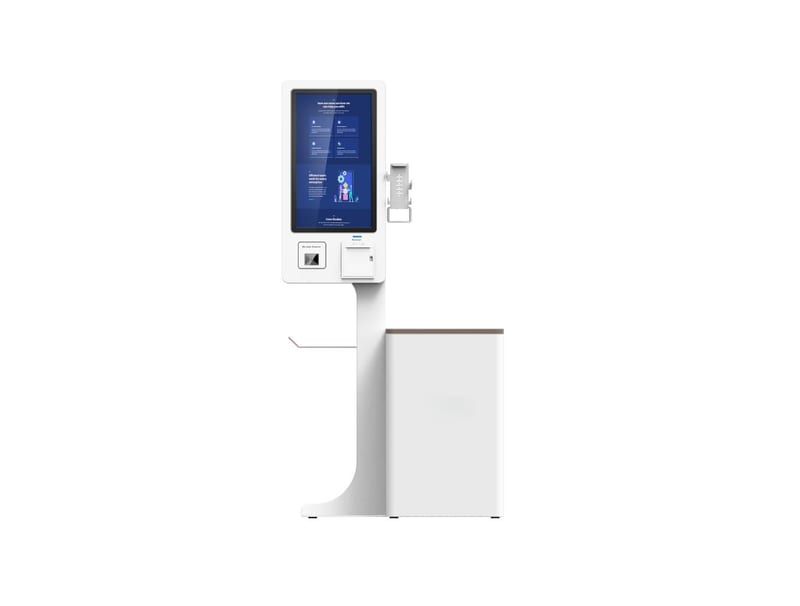
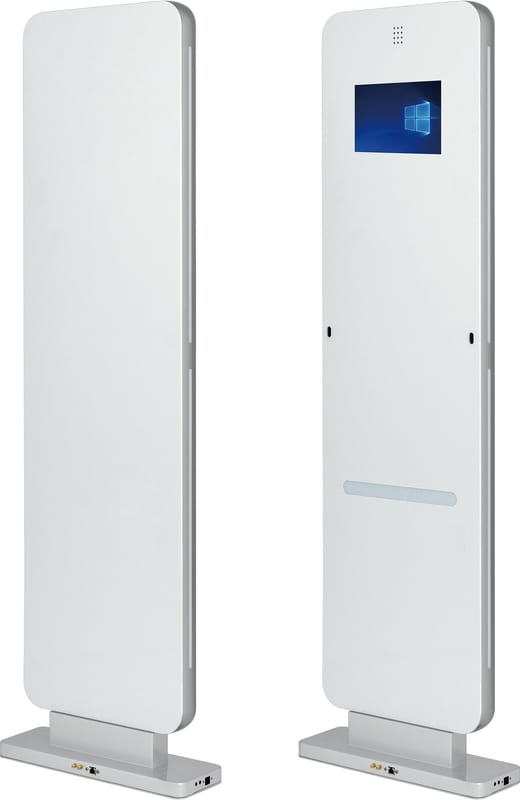
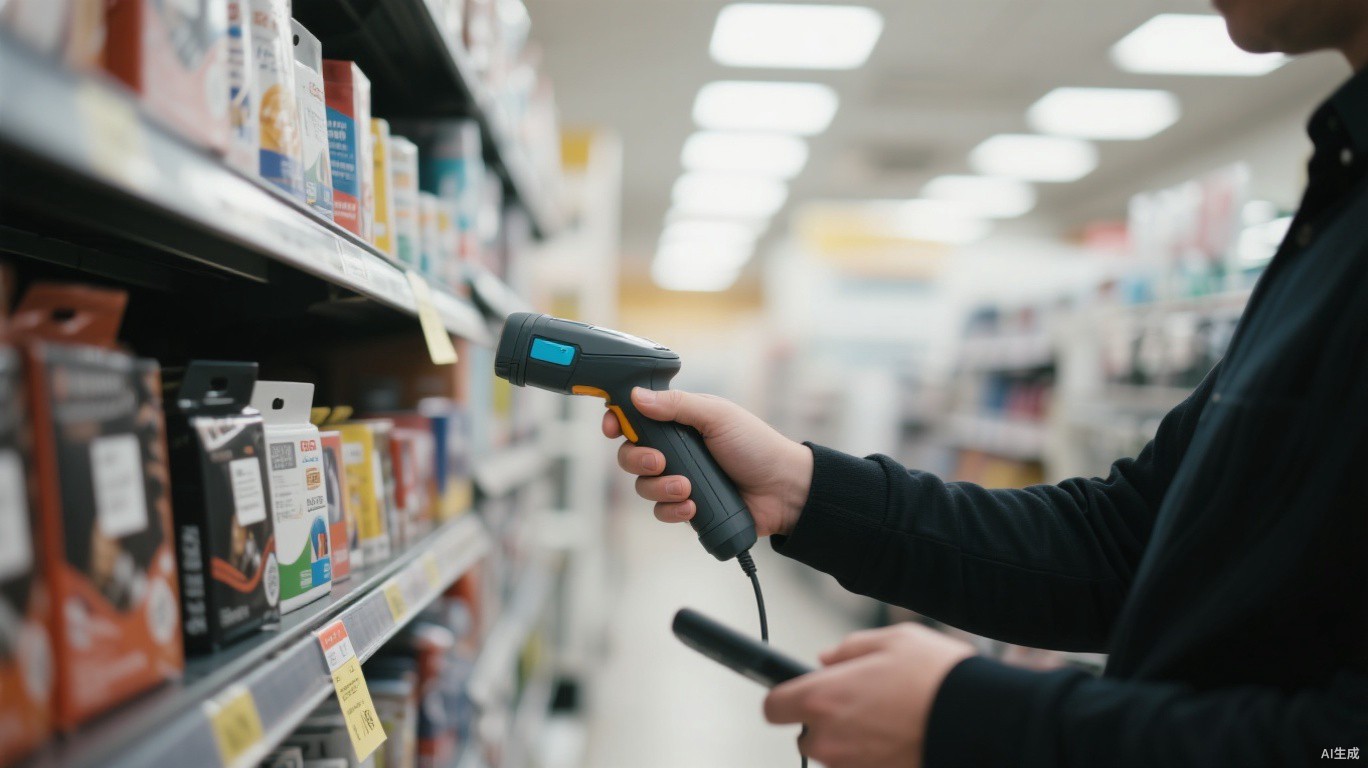
The Impinj R2000 and the Impinj E710 are often compared as if one replaced the other. They did not. The R2000 is the flagship reader chip of the Indy family, first released in 2008 and still the reference for high-end fixed readers. The E710, introduced in 2020, is a highly integrated single-port module aimed at handhelds and compact fixed readers. They answer different questions, and choosing between them is a system-design decision rather than a version upgrade.
What separates the two at the architecture level?
The R2000 is a direct-conversion zero-IF reader chip with eight antenna ports, two independent receive chains and a full sub-1 GHz front end. It expects a host processor, external power amplifiers, a synthesizer and a substantial RF layout — a genuine reader design, not a module you solder onto a microcontroller board.
The E710 is a module: it integrates the transceiver, the power amplifier, the coupler, the antenna port and the digital interface in a small footprint, and exposes a simpler host interface. That integration is the point — it cuts board area, RF design effort and bill of materials for products that only need one antenna.
- R2000: 8 ports, 2 receive chains, external PA and filter design, full reader architecture.
- E710: 1 port (with internal multiplexing options in related parts), integrated PA, simplified host interface.
- Neither is a drop-in replacement for the other; schematics, firmware and enclosure all change.
How do the receivers compare in practice?
The R2000's two independent receive chains allow simultaneous monitoring of two antennas and true dense-reader operation, which matters in portals and conveyor tunnels where tags arrive continuously and must not be missed at speed. Its sensitivity is in the class that supports reads at the edge of legal power on difficult tags.
The E710 gives up some of that headroom to achieve integration and low power. In exchange it delivers excellent sensitivity for its class and a very fast tag-identification rate on short range, which is exactly what a handheld needs: one antenna, close range, thousands of tags per second in a sweeping motion.
- Portal and tunnel: R2000's dual receive chains are a functional requirement, not a luxury.
- Handheld and sled: E710's single port and low power fit the thermal and battery envelope.
- Benchmarks that quote only maximum read rate miss the point; range at a given tag and orientation matters more.
Why do antenna ports decide the product category?
Eight ports on the R2000 is not a specification boast. It lets one reader cover eight read zones — four dock doors, or a portal plus adjacent shelf antennas — with per-port power control and per-port RSSI. That is what makes a single fixed reader able to implement zone logic in a warehouse.
A single-port E710 forces a different architecture: either one reader per zone, or an external antenna multiplexer that adds switching loss and cost. For a handheld this is irrelevant, since the operator physically points the antenna. For a four-door dock it is decisive.
- Fixed, multi-zone: R2000 or a comparable multi-port chip.
- Fixed, single-zone, low cost: E710 with an external multiplexer only if switching loss is acceptable.
- Mobile: E710, always, because there is only one antenna and one operator.
What do power, heat and battery actually cost?
Thermal design is where fixed and handheld readers diverge most. A fixed reader has mains power and a metal enclosure; a handheld has a battery, a plastic shell and a user holding it.
The R2000 at full power draws several watts and needs a proper thermal path, a heatsink and often a fan or a metal chassis as heat spreader. That is acceptable in a fixed reader and impossible in a handheld.
The E710 is designed for a lower power envelope, with integrated PA and sleep modes that let the host duty-cycle the reader aggressively. In a handheld, the read module is rarely the dominant battery consumer — the display and the Wi-Fi radio usually are — but every watt saved in the RF chain extends the shift.
- Fixed: prioritise link budget and port count, then design the thermal path.
- Handheld: prioritise average power, duty cycling and heat spreading through the shell.
- Overheating a handheld module is the most common cause of read-rate collapse in the field.
What does cost per port look like at system level?
Chip price is the least interesting number. Compare the full cost of delivering N read zones.
- R2000 design: higher chip cost, higher RF engineering cost, more board area, but one reader covers many ports.
- E710 design: lower chip and integration cost, smaller board, faster time to market, but one reader per zone unless you add a multiplexer.
- Multiplexer penalty: 0.5–1.5 dB insertion loss and additional switching time, which reduces effective read rate.
For a two-port fixed reader, the E710 plus multiplexer is usually cheaper. For eight ports, the R2000 wins on both cost and performance, because the multiplexer path collapses.
Which reader class does each chip belong to?
Map the chip to the product, not the other way round.
- R2000: high-end fixed readers, portals, conveyor tunnels, dock doors, dense-reader environments, four-to-eight antenna installations.
- E710: handhelds, sleds, compact fixed readers, desktop readers, kiosks, single-antenna industrial readers.
- Wrong pairings: putting an R2000 in a handheld (thermal and power failure) or an E710 behind an eight-port portal (range and throughput shortfall).
How should you evaluate them without benchmarking the wrong thing?
Do not compare datasheet read rates. Compare the metric your process depends on.
- Define the tag population and the worst-case tag in it.
- Define the required read zone and the dwell time at that zone.
- Measure read rate at the actual conveyor or dock speed, over at least 500 passes.
- Measure thermal behaviour after 30 minutes of continuous operation, not after 30 seconds.
- Measure the total cost of the zones you actually need, including multiplexers.
A handheld with an E710 that reads 99.5 % of garments at 1.5 metres is the right product. A fixed reader with an R2000 that holds 99.9 % on a 3 m/s conveyor with two antennas per lane is the right product. Trying to make one do the other's job is where projects fail.
Bottom line
The R2000 is a multi-port, high-performance reader engine for fixed infrastructure; the E710 is an integrated single-port module for compact and mobile products. Choose by port count, thermal envelope and read-zone logic, then verify on your own tags at your own speed. The chip is never the bottleneck; the mismatch between chip class and application is.