Every few years someone announces that chipless RFID will replace barcodes, and every few years the label stays on the pallet. The technology is real and it is already used — just not where the headlines promise. Understanding the trade-off is more useful than tracking the hype.
What chipless actually means
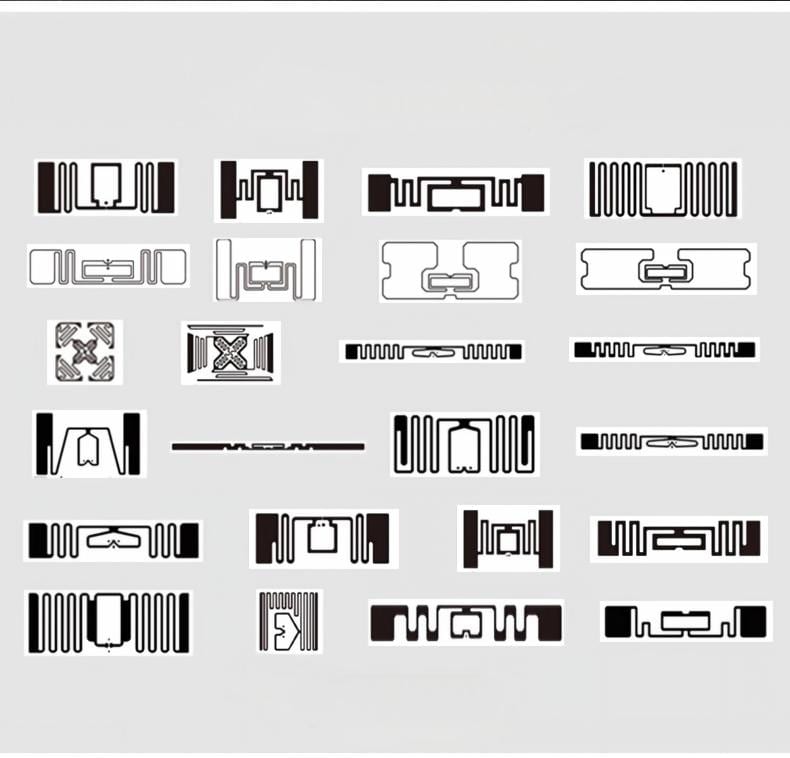
A chipless tag is a passive electromagnetic structure that encodes information in its physical geometry.
- There is no silicon, so there is no memory, no computation and no state.
- The code is written at manufacture, by cutting or printing a specific pattern.
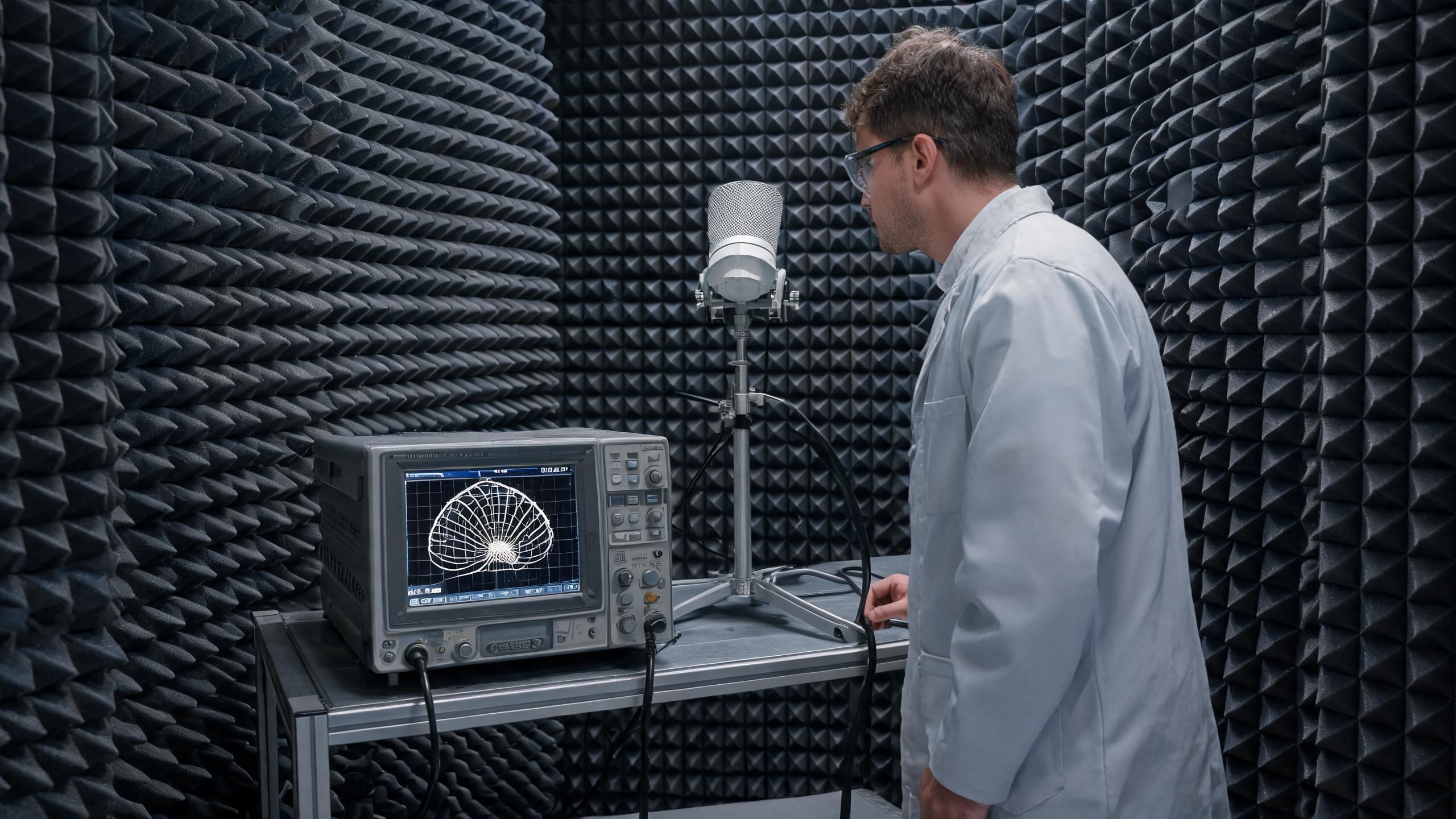
- Identification comes from the way the structure reflects a swept frequency or returns a pulse train.
- No chip means no EPC, no password, no kill command and no write.
- It also means no cost floor from silicon, which is the entire economic argument.
The encoding families
Three approaches dominate the literature and, to a lesser extent, the market.
- Frequency-signature tags use resonators at specific frequencies; the presence or absence of each bit forms the code.
- Time-domain tags use delay lines, so the code arrives as a sequence of echoes.
- Hybrid approaches combine resonators and delay to raise the bit count without raising cost.
- Bit capacity is typically tens of bits, far below the 96-bit EPC Gen2 baseline.
- Read range is short by UHF standards, often centimetres rather than metres.
Where the physics bites
The weaknesses are structural, not temporary engineering gaps.
- Without a chip there is no protocol, so tag-to-reader handshaking must be reinvented per vendor.
- Without handshaking, multiple tags in a field cannot be cleanly singulated; collisions are the default.
- Environmental detuning affects a resonant structure more than a chip-based inlay.
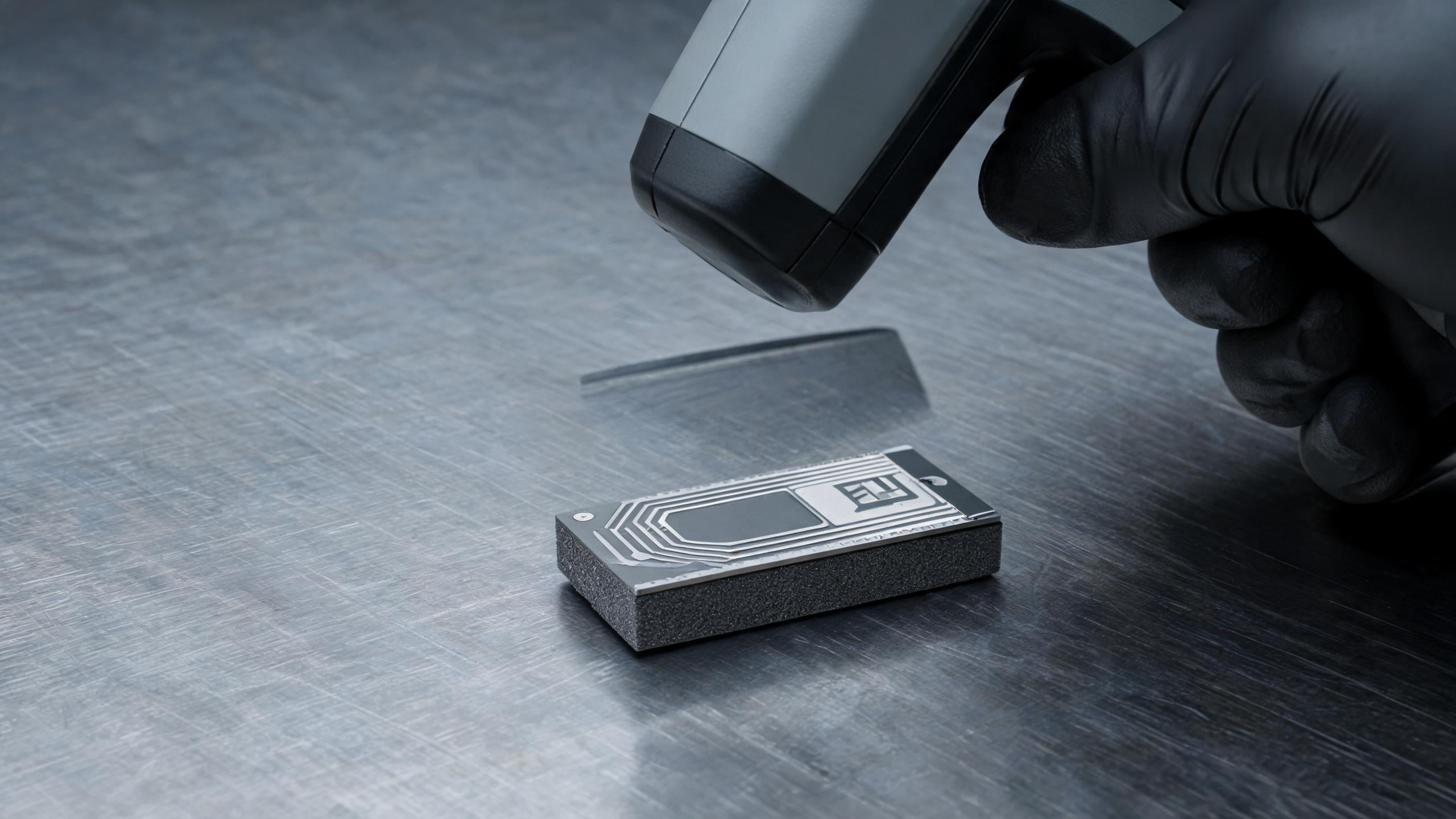
- Reading through liquids or near metal is worse, because the code is the antenna.
- Interoperability between vendors is limited, which is exactly the problem EPC Gen2 solved for chipped tags.
What it is genuinely good at
Chipless wins where the tag is consumed, where the code never changes, and where a metre is enough.
- High-volume ticketing: event tickets, transit tickets, luggage straps, single-use passes.
- Brand protection on packaging, where the code is fixed and the check happens at close range.
- Consumable and medical packaging where per-item cost must approach zero.
- Tamper evidence, because the pattern is destroyed when the package is opened.
- Cold-chain, agricultural and food tracing where the identifier is batch-level rather than item-level.
What it cannot do
Most failed chipless pilots fail because the project needed a chipped tag and did not know it.
- Unique serialisation of individual items at scale, because the code is fixed at manufacture.
- Any workflow with writes: no EPC rewriting, no user memory, no lock bits.
- Long-range portal reading at dock speed, which needs metres of range and fast singulation.
- Security use cases that rely on cryptographic authentication or kill commands.
- Sensor integration, which requires power and circuitry that chipless does not have.
The comparison that matters
The honest comparison is not chipless versus EPC Gen2; it is chipless versus the printed barcode it would replace.
- Against a barcode, chipless offers non-line-of-sight reading and no line-of-sight constraint per item.
- Against a barcode, chipless costs more and needs a reader that most operations do not have.
- Against EPC Gen2, chipless is cheaper per unit and far less capable.
- Against NFC, chipless is cheaper and has no phone ecosystem at all.
- The decision hinges on whether the operator needs to write, serialise or authenticate.
How to evaluate a chipless proposal
Vendors are enthusiastic, and the evaluation should be boring and specific.
- Ask for the bit count, the read range on the actual substrate, and the singulation behaviour with ten tags present.
- Ask what happens when two tags touch, and when the tag is placed on metal or near liquid.
- Ask for the reader hardware requirement and its cost, because this often decides the project.
- Ask for the encoding method at manufacture, and whether the code can be verified after printing.
- Ask for interoperability: can a second vendor's reader read the tag, and at what range.
If the answers are vague, the pilot will be vague too. Chipless RFID is a legitimate technology with a narrow, real niche: cheap, fixed, close-range identification of things that are consumed. Everything else is still chipped, and will be for a while.
What would make it mainstream
The gap is not the tag; it is the ecosystem around it.
- A shared air interface, so one reader can interrogate any vendor's tag, which is exactly what EPC Gen2 did for chipped labels.
- A reliable singulation method for dozens of tags, because bulk reading is the entire point of RFID.
- A printing process that writes the code inline with the label press, rather than as a separate pass.
- Standard test methods for range and detuning, so buyers can compare vendors honestly instead of comparing brochures.
- A cheap reader that actually exists in the supply chain, because a ten-cent tag with a thousand-dollar reader changes nothing.
How to run a small pilot
If a use case survives the questions above, prove it in four weeks rather than in a slide.
- Take two hundred real items and tag them at the step where they will really be tagged in production.
- Measure read rate at the distance the business needs, not at the best-case distance on a clean bench.
- Run the check at production speed, because a slow manual pass hides every weakness the technology has.
- Test the messy conditions: stacked, wrapped, near metal, near liquid, and after a week of handling.
- Count the failures you cannot explain; if that number is above a few percent, the process is not ready.