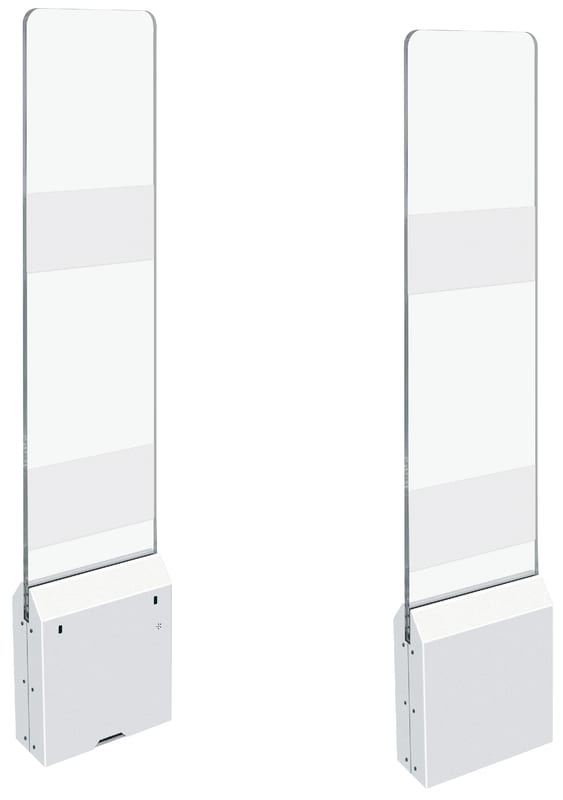
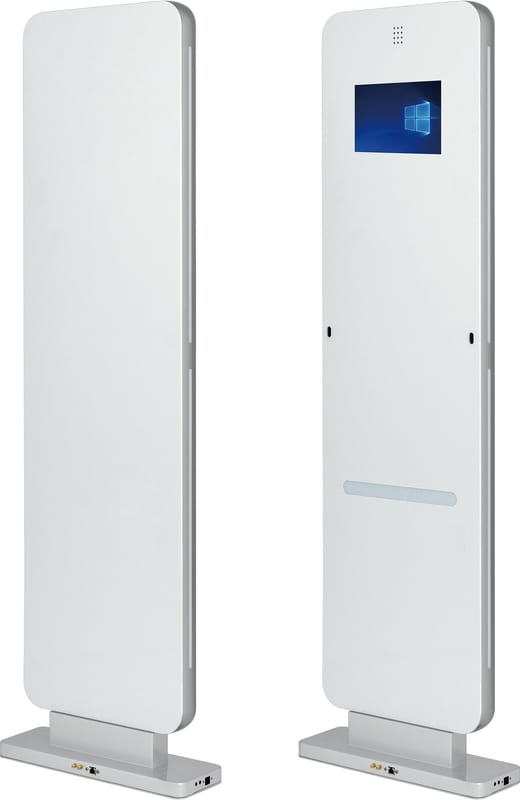
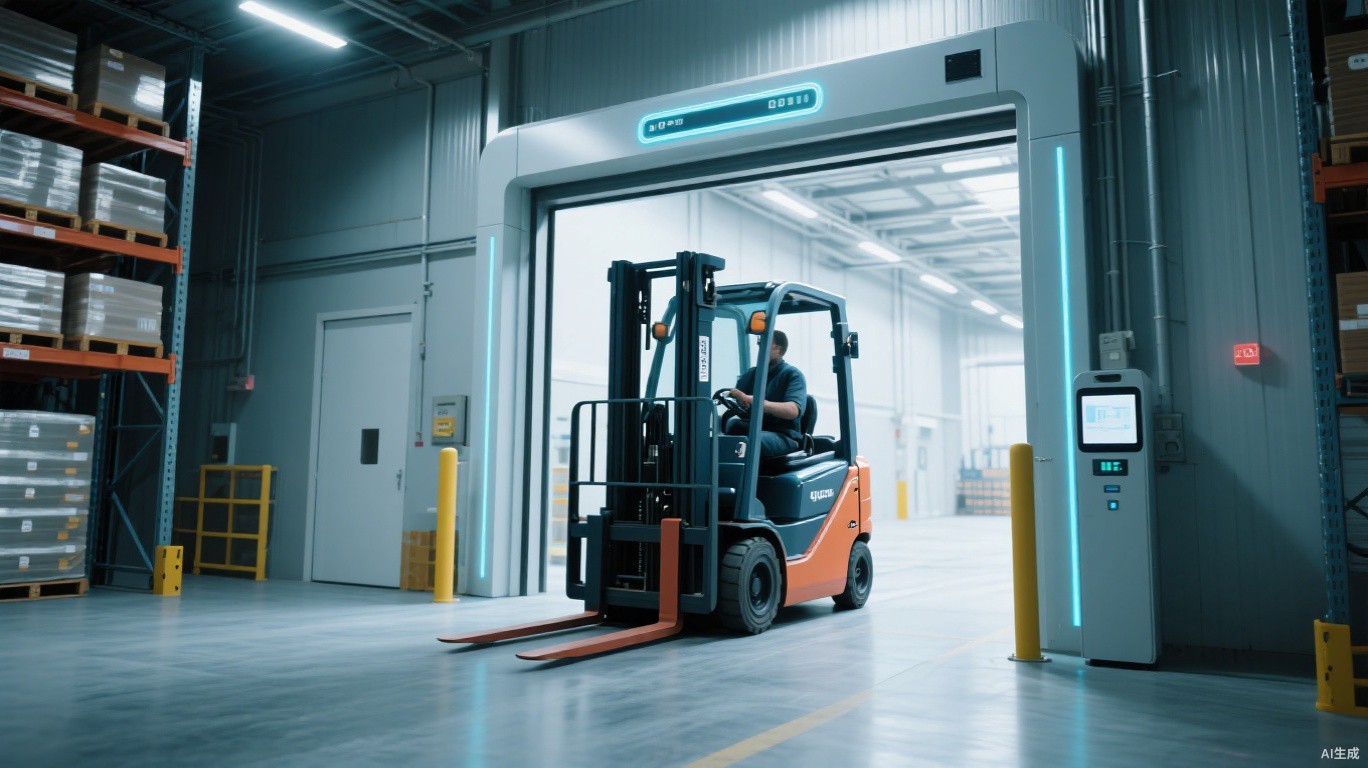
An automotive supplier does not buy RFID because it is interesting. It buys it because a customer audit asked for part-level traceability, or because work in process disappeared into the shop floor and nobody could say where. The technology only pays when it is placed where parts actually accumulate.
The four places a tag can survive
Most of an automotive plant destroys tags. A small number of locations do not.
- The press shop is hostile: oil, shock, and metal on metal, but a tag on a stillage can survive if it is protected.
- The body shop has welding currents and metal frames, which is where most UHF pilots quietly die.
- The paint shop is the hardest: ovens at 180 degrees or more will destroy a standard inlay.
- Final assembly is friendly: plastic carriers, moderate temperatures and a need to confirm the right part at the right station.
- Between these islands, parts sit in buffers where nothing is read, and that is where the data gap starts.
Choosing the tagging level
The single most consequential decision is whether you tag the part, the carrier or the container.
- Part-level tagging gives the traceability the auditor wants, and costs the most per unit.
- Carrier-level tagging survives the process, because the carrier never enters the oven.
- Container-level tagging suits bulk fasteners and small components where individual tags are absurd.
- A hybrid model is normal: carrier tags through paint, part tags at assembly.
- Write the traceability requirement down before choosing, because "part level" and "part level for safety-critical items" are different budgets.
Surviving heat, paint and chemicals
A tag that fails in the oven is discovered a week later, in a quality complaint.
- Standard PET inlays deform at paint-cure temperatures; high-temperature tags use different substrates and attach differently.
- The adhesive is often the first failure, not the chip; a tag that slides leaves no record.
- Cathodic dip coating and phosphate baths attack labels, so the tag must be masked or moved.
- Reusable carriers need tags that survive cleaning cycles, which is a different test from surviving one oven pass.
- Verify survival by reading after the process, not by reading before it; a tag can look perfect and be dead.
Reading in the real environment
Shop floors are the worst RF environment in manufacturing, and the read points must be designed for it.
- Metal racks, welding equipment and motors create reflections that move read zones by tens of centimetres.
- Antennas mounted at head height read the top layer of a stillage and miss the rest.
- Handheld reads at buffers are the pragmatic answer for low-volume, high-mix lines.
- A read point at the line side confirms the part before it is consumed, which is the data the ERP actually needs.
- Never design a read point without testing it with a full stillage, because an empty one always works.
Work in process visibility
WIP is the number every plant manager argues about, and it is usually invisible.
- Count parts entering a buffer and leaving it, and the difference is WIP without anyone walking the floor.
- Timestamped reads give cycle time per operation, which exposes the real bottleneck rather than the assumed one.
- Alert when a part sits in a buffer beyond its expected dwell, before it becomes an expedite.
- Track rework loops explicitly, because a part that returns to a previous station breaks every linear model.
- Publish the WIP number on a shop-floor screen; visibility changes behaviour faster than any report.
Traceability that satisfies an audit
An auditor does not want a database; they want to follow one part from raw material to shipment.
- Bind the tag to the serial number at the first operation where the part is individually identified.
- Record every station transition with time, station and operator or machine, not only the final assembly.
- Keep supplier lot and heat number attached to the part record, because recalls are lot-based.
- Retain records for the period the standard requires, and test retrieval with a real part number.
- Prove the chain with a drill: pick a shipped part, walk backwards, and see whether the data survives the walk.
Integration with the ERP and MES
RFID data is worthless if it arrives as a file nobody opens.
- Report consumption at the point of use, so backflush matches reality rather than a schedule.
- Write station confirmations directly to the work order, so progress is real-time instead of end-of-shift.
- Keep the tag identifier as an attribute of the production lot, not a separate table nobody joins.
- Handle exceptions in the system, not in a spreadsheet maintained by a supervisor.
- Reconcile counts nightly between the tag system and the ERP, and investigate every unexplained difference.
The honest return
The numbers are attractive but they come from specific mechanisms, and it is worth naming them.
- WIP reduction comes from knowing where parts are, which stops double-ordering "just in case".
- Labour saving comes from replacing manual scans and paper travellers.
- Quality cost reduction comes from faster containment when a defect is found.
- The infrastructure is a fixed cost per read point, so the case improves with volume per line.
- Start with one line and one pain, then extend; plants that begin with a plant-wide plan usually stall in the second workshop.
The pattern that works is unglamorous: tag where the tag survives, read where the decision is made, and let the ERP consume only the events it can act on.
Where the data model usually breaks
Most failed rollouts did not fail at the antenna; they failed at the schema.
- Treating the carrier as the unit of traceability, then discovering the auditor wants the part.
- Storing station events without a stable part identity, so joining them later is guesswork.
- Modelling rework as a linear sequence, then discovering parts that visit a station three times.
- Forgetting the supplier lot on the part record, which breaks every recall query.
- Counting reads instead of counting parts, which inflates WIP whenever a stillage is passed twice.
Fix the data model before the pilot, because it is the one part of an RFID project that is expensive to change after the line is running.